When it comes to expedition cruising, no one does it quite like Lindblad Expeditions–National Geographic. They pioneered this style of travel nearly 60 years ago, starting with their first voyage to Antarctica in 1966. Their next destination? The Galápagos Islands. It’s where their legacy of exploration truly took off – and after experiencing it myself, it’s easy to see why.
This partnership between Lindblad and National Geographic brings together expert naturalists, scientists, and storytellers to help guests connect deeply with each destination. You don’t just see the wildlife … you learn about the ecosystems, conservation efforts, and human stories that make the Galápagos one of the most fascinating places on Earth.
Where are the Galápagos Islands?
The Galápagos Islands are located about 600 miles (1,000 kilometers) off the coast of Ecuador, straddling the equator in the Pacific Ocean. Their remote location and unique volcanic origins have created the perfect conditions for wildlife found nowhere else on Earth. Giant tortoises, marine and land iguanas, blue-footed boobies, Galápagos penguins, and countless other species have evolved here in relative isolation, making the islands a living laboratory of nature.
Part of what makes the Galápagos so biologically rich are the powerful ocean currents that converge here. The cold Humboldt and Cromwell currents mix with the warmer Panama Current, bringing nutrient-rich waters that support massive populations of fish, seabirds, and marine mammals. These currents also influence the islands’ climate and vegetation, creating microhabitats that sustain a wide variety of wildlife. The convergence of these currents, combined with the islands’ isolation, is why the Galápagos remains one of the most extraordinary places for nature lovers and adventurers alike.
Getting There
My sister joined me for this trip, which made the experience even more special. Getting to the Galápagos is simpler than you might expect – once you make it to Ecuador, Lindblad takes care of everything from there. You can choose to fly into Quito or Guayaquil. The flight from Quito stops briefly in Guayaquil to pick up guests who start their journey there before continuing to the islands.
We chose Quito because the return flight offered an overnight option, giving us an extra full day at home with our kids once we got back. From the moment we stepped out of baggage claim, a Lindblad representative was waiting for us and escorted us to our hotel. From that point on, they were with us every step of the way until we returned to Guayaquil or Quito at the end of the expedition.
Life Onboard and a Look at Our Week
Our adventure began with a relaxed first day onboard the National Geographic Endeavour II, getting familiar with the ship and the incredible team that would guide us through the week ahead.
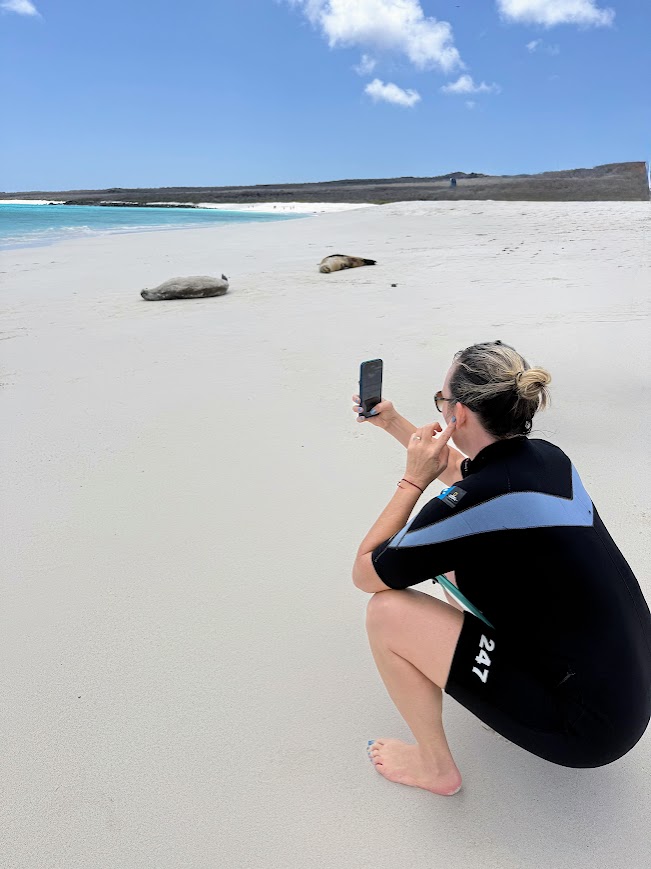
Day 2 started with a talk about snorkeling and an introduction to our gear. Later that morning, we had our first snorkel experience off Española Island, where I quickly discovered how much of a game-changer a wetsuit can be – it adds so much buoyancy and comfort in the water.
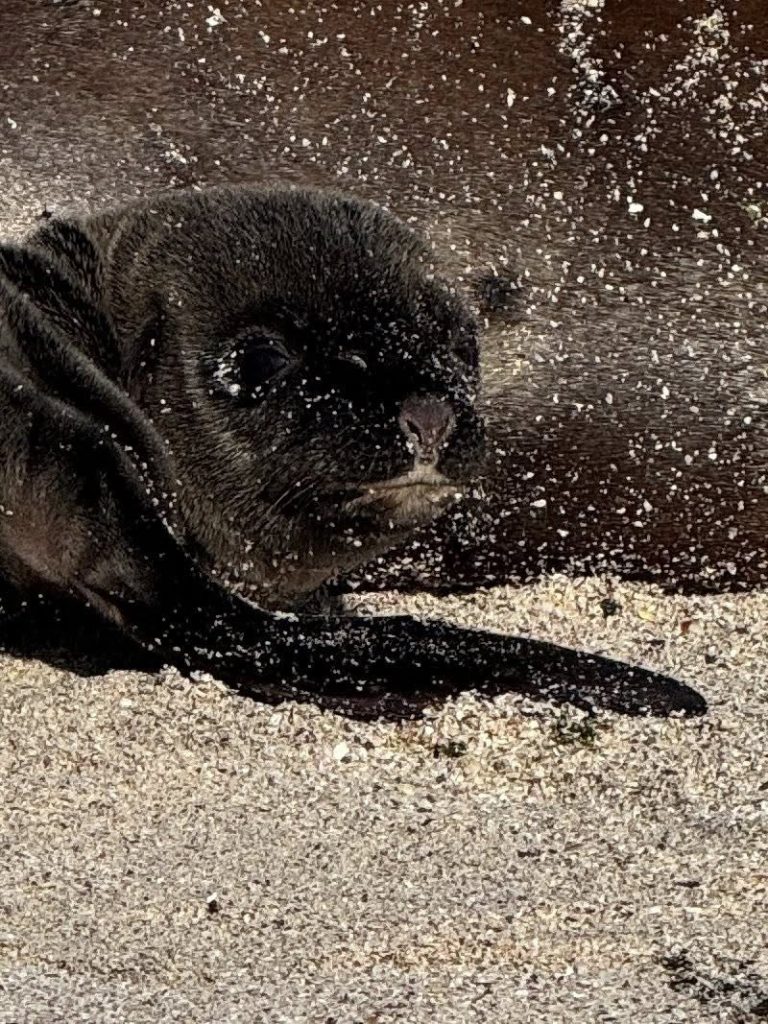
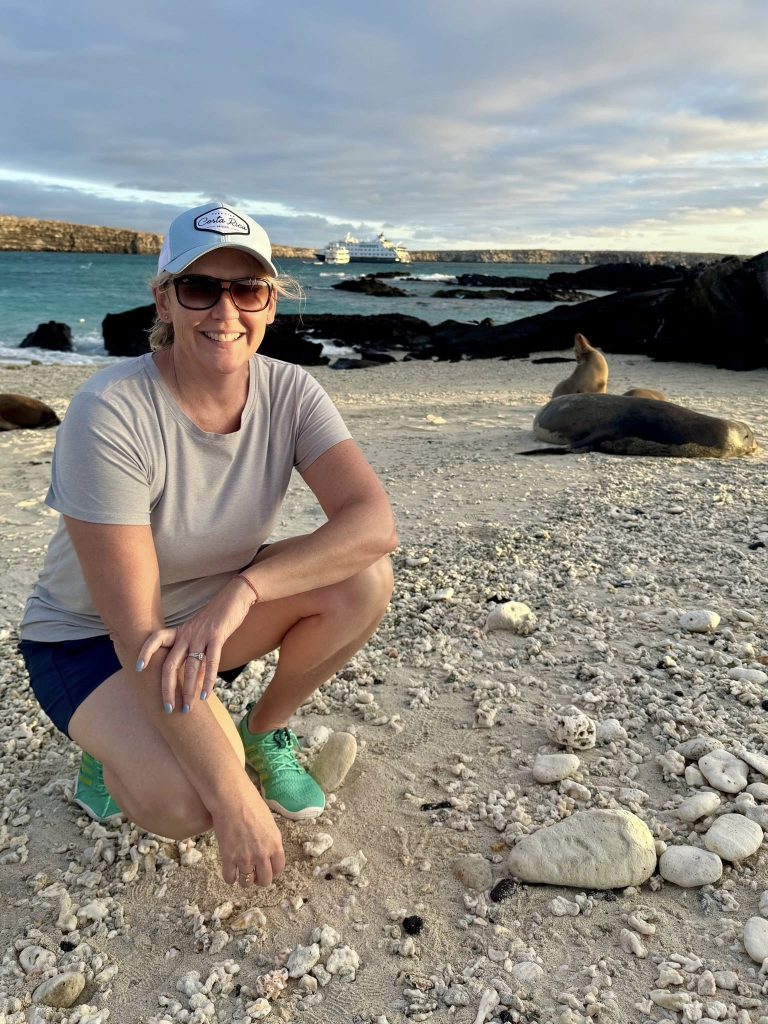
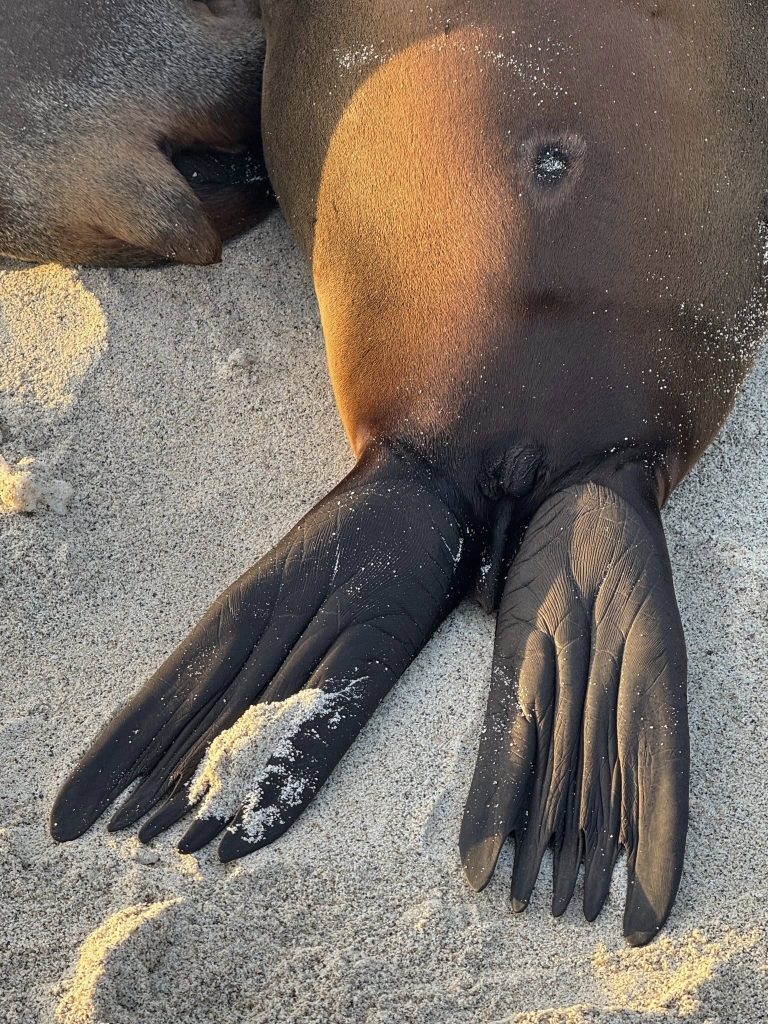
That afternoon, we did a dry landing for a hike that brought us face-to-face with baby sea lions and their mothers …
We were also treated to our first blue-footed boobies, and the only albatross sightings of the trip, including a few chicks (which are huge!). Paths were lined with marine iguanas, so we carefully tiptoed around them.
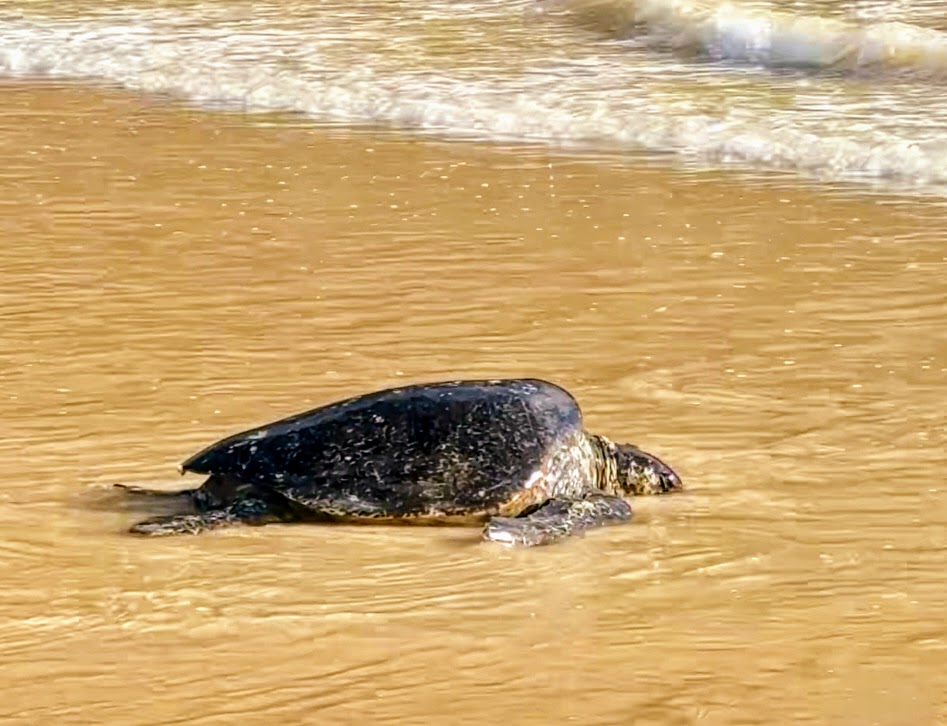
Day 3 began with an early hike on Floreana Island, where sea turtles stole the show.
We skipped snorkeling that morning in favor of a ride on the ship’s glass-bottom boat and were amazed by how many fish we could see below. In the afternoon, we took to the kayaks and found ourselves surrounded by sea turtles. They popped up around us and swam gracefully beneath the kayaks, which was an unforgettable way to experience these incredible creatures up close. Here is a video link to that experience, which can’t be captured in photos!
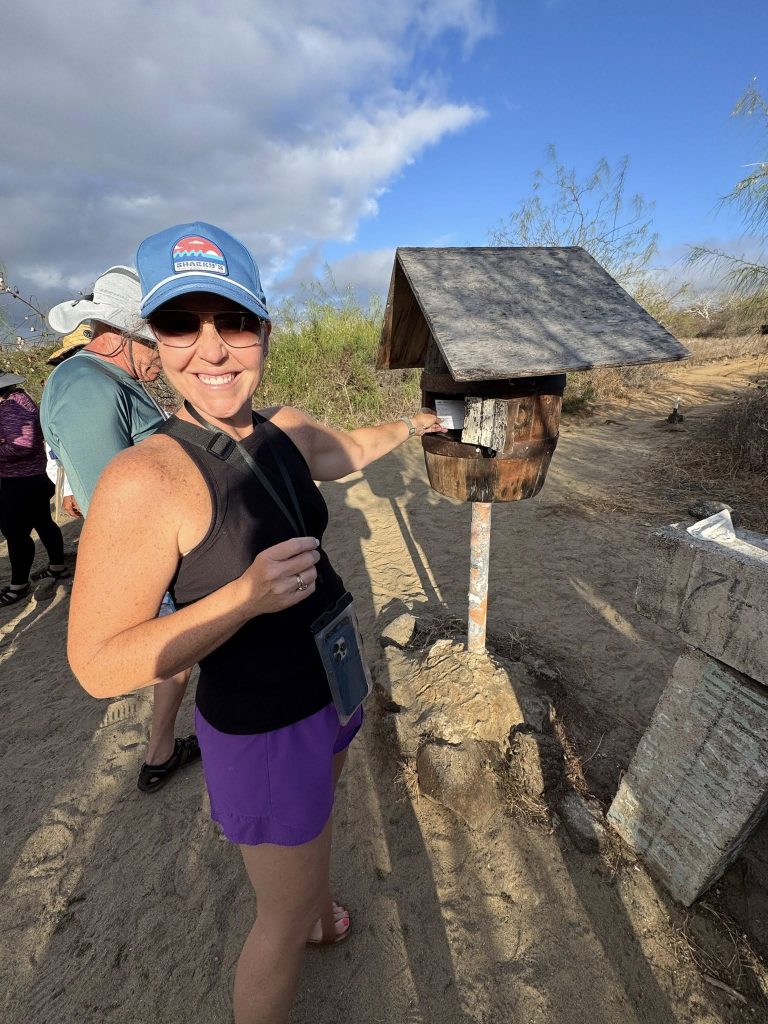
After kayaking, we visited Post Office Bay, home to a tradition started by 18th-century whalers who left letters to be hand-delivered by other sailors passing through. Visitors still take part today. Floreana also carries a bit of mystery and is the setting for a real-life story of early settlers whose lives took dramatic turns, now portrayed in the film Eden.
Day 4 was spent on Santa Cruz, the most populated island in the Galápagos, and one of the few with fertile soil. Unlike many of the drier islands, Santa Cruz benefits from misty highlands that allow lush farms to thrive. We started at the Charles Darwin Research Station, learning about their giant tortoise breeding and conservation program. Each island has its own distinct species, so once young tortoises are large enough, they’re returned to their native island.
I couldn’t resist the chance to take a photo of a baby tortoise numbered SIX-SEVEN (if you have a middle schooler, you will understand).
From there, we visited a local farm in the highlands, where sugar cane and coffee are grown using traditional methods. The contrast between the fertile highlands of Santa Cruz and the arid landscapes of other islands really highlights the Galápagos’ unique ecology. One of the things I loved most was seeing how Lindblad sources nearly all food from Ecuador, including local farms and, when possible, Galápagos farms. This approach allows you to taste the flavors of the country while on board – fresh, authentic, and sustainable.
After the farm visit, we headed to a ranch that sits along the natural paths of the giant tortoises. Lunch was served on the property, giving us the chance to see these incredible creatures up close in their natural environment. Rubber boots were provided to protect us from tortoise droppings and fire ants, making the experience comfortable as well as immersive. We finished the day with a little free time in town before returning to the ship for dinner, enjoying another chance to savor Ecuadorian-inspired cuisine prepared from local ingredients.
Day 5, we explored the north side of Santa Cruz in search of elusive land iguanas. While marine iguanas stay near the coast, the land species have more territory to roam, so sightings aren’t guaranteed, but we spotted two! In the afternoon, we kayaked through mangroves, watching rays and sharks glide beneath us in the calm water
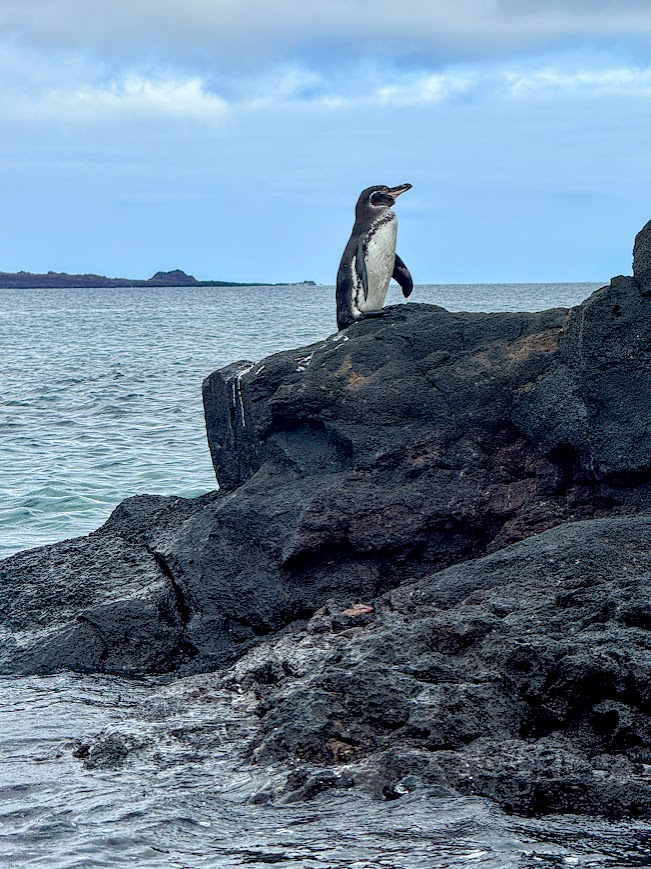
Day 6 was all about the Galápagos penguin, which is the only penguin species north of the equator. Cool ocean currents around the islands create just the right conditions for them to live here, even in a tropical climate. We took a pre-breakfast Zodiac ride around Bartolomé Island, spotting them along the lava rocks, then snorkeled in the same area later that morning. It turned into one of those “see everything” moments: penguins, sea lions, sharks, octopus, stingrays, and vibrant schools of fish. We skipped the second snorkel that afternoon, using the downtime to catch up on some work and maybe a little nap.
As the sun set, we ventured back out by Zodiac, where four playful penguins splashed nearby, a sea lion tried to join in, and another circled our boat before the light faded – a perfect ending to an incredible day.
I am also adding a video link because the penguins are too cute frolicking for you not to watch!
Our final day was spent on Genovesa Island, a paradise for bird lovers. Sea birds were everywhere – frigatebirds, red-footed boobies, gulls, and more – and I was glad I wore a hat! That afternoon, we visited Darwin Bay, where we watched a newborn sea lion pup learning to nurse. The little one was persistent, and the mother was doing her best to guide the baby but the pup could not quite figure it out. It was both adorable and a bit frustrating to watch, seeing their determination and patience in action.
Not all encounters were as lighthearted. We also saw a sea lion tangled in a fishing net, and our guide quickly photographed it to report to the National Park rangers, who will do their best to free it. Even with single-use plastics banned and fishing tightly regulated in the Galápagos, strong currents bring debris from around the world. It was a stark reminder that our choices at home – like reusing a water bottle or skipping a plastic bag – an make a real difference for wildlife in places like this.
Final Thoughts
If you love adventure but don’t want to sacrifice comfort, this is your sweet spot. Think up-close wildlife encounters, expert naturalists leading the way, small-ship access to places big ships can’t reach, and time to truly explore instead of rushing from port to port.
It’s not about checking boxes. It’s about discovery, connection, and experiencing the world in a way that feels personal and meaningful.
Curious if this kind of journey fits your travel style? Let’s chat and make sure your next adventure is the right one.
One of our naturalists put together a gorgeous underwater video from our trip. It’s long, but you can speed it up or just watch a few minutes. It’s fascinating to see these creatures in their natural environment, and it really brings the Galápagos to life.
And for the divers out there, Lindblad does offer an option to add two days of diving during the voyage. The add-on is only available on certain trips for certified divers and must be arranged during the booking process, so please reach out for more details. Whether you dive, snorkel, or just want to witness via glass-bottom boat, you can experience the magic of the water surrounding Galapagos!