
Five Mediterranean Experiences to Help You Choose Your Next Trip
If you're deciding where to focus your Mediterranean time, discover how one Explora Journeys sailing offers valuable perspective on five distinct regions.
If you're deciding where to focus your Mediterranean time, here's what I learned on a recent Explora Journeys sailing with Wander Women: you can experience five distinctly different regions in eight days. We boarded in Athens and disembarked in Venice, visiting the Cyclades, Dodecanese, Ionian Islands, coastal Croatia, and inland Croatia. For anyone who isn't sure which region to return to for a deeper dive, this kind of itinerary offers valuable perspective.
I know the Mediterranean well. I have my favorites. But one of the most useful travel strategies is this: if you can't decide between multiple regions, a regional sailing lets you sample five different worlds in a single trip. Then you know where to focus your next trip - whether that's a land-based itinerary focused on one region, or another Explora sailing to explore different ports.
Quick Guide: Five Mediterranean Regions on One Cruise
Day 2 - Paros (Cyclades): Iconic white-washed Greek islands. Key takeaway: The quintessential Greek island experience with fishing villages and Byzantine history.
Day 3 - Rhodes (Dodecanese): Greek with Ottoman/Turkish influence. Key takeaway: Turkish architecture and proximity to Turkey create a distinctly different Greek experience than the Cyclades.
Day 5 - Corfu (Ionian Islands): Italian-feeling Greek island. Key takeaway: Bridges Greek and Italian aesthetics; feels more Mediterranean European than purely Greek.
Day 6 - Trogir (Coastal Croatia): Medieval stone architecture, fortress-like charm. Key takeaway: A completely different Mediterranean - darker, more intimate, historically layered compared to Greek islands.
Day 7 - Plitvice Lakes (Inland Croatia): UNESCO-listed waterfalls and living geological laboratory. Key takeaway: An inland excursion (2.5 hours each way) that offers a completely different landscape - Alpine rather than Mediterranean.
The Strategy: One Explora Journeys sailing lets you sample five distinct Mediterranean regions in eight days. Use this trip to discover which region calls to you, then return for a deeper land-based dive or another Explora sailing to unexplored ports.
Paros: The Greece Everyone Envisions
We tendered into Paros on Day 2. Tenders can take longer depending on timing, and we had a bit of a wait. A few of us visited the Church of a Hundred Doors at the port first, but most of our time was spent in town shopping for hats. We all came away with new ones. I was actually already wearing a Greece hat from a previous trip and my new one didn't match my outfit, so you'll see it in later photos as you scroll!
I had planned a Byzantine Road hike with some of the women, but the tender timing ate into our morning. By the time we finished the hike, my original plan - a hotel site visit on the island - had become too complicated to manage. My phone was dying from a charging issue the night before, logistics were tangled, and frankly, it was easier to stay with the group.
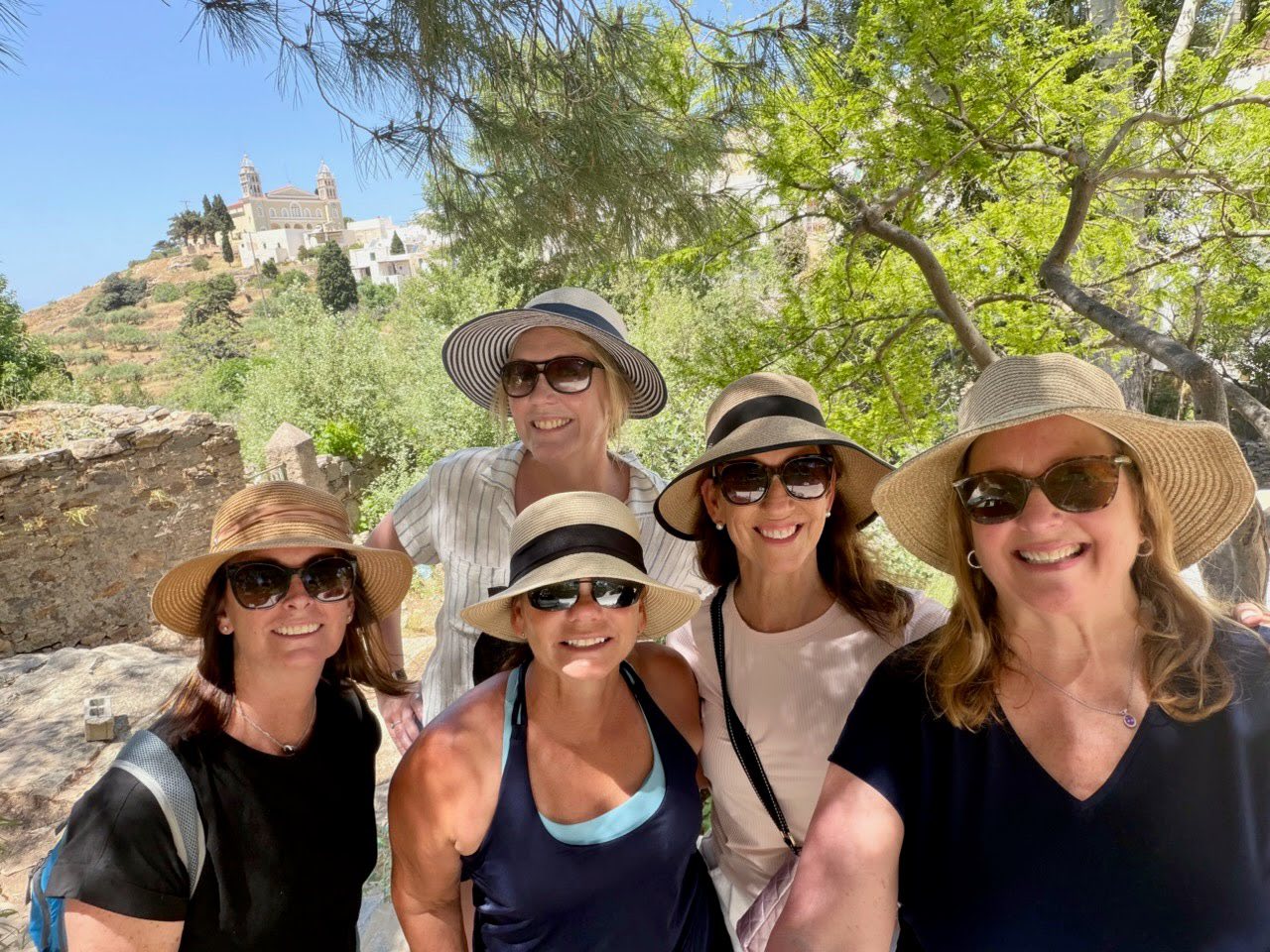
The Byzantine Road hike with the group
We headed to Noussá, a fishing village on the other side of Paros that I'd visited a couple of years ago with my family. We had a long lunch on the water, watching fishing boats come and go, then walked around town and visited a beach before heading back to the ship. It wasn't what I'd planned. It was better.
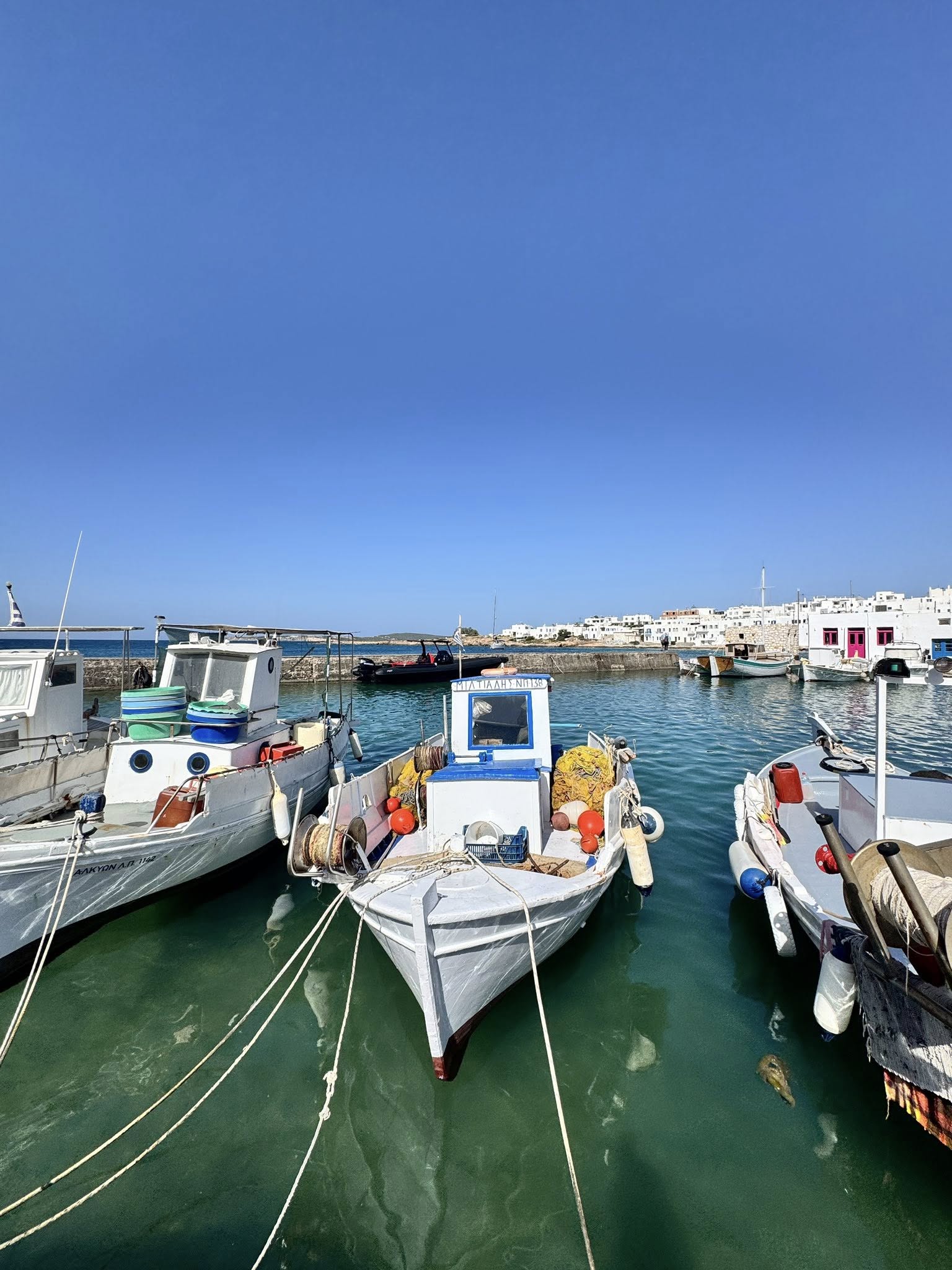
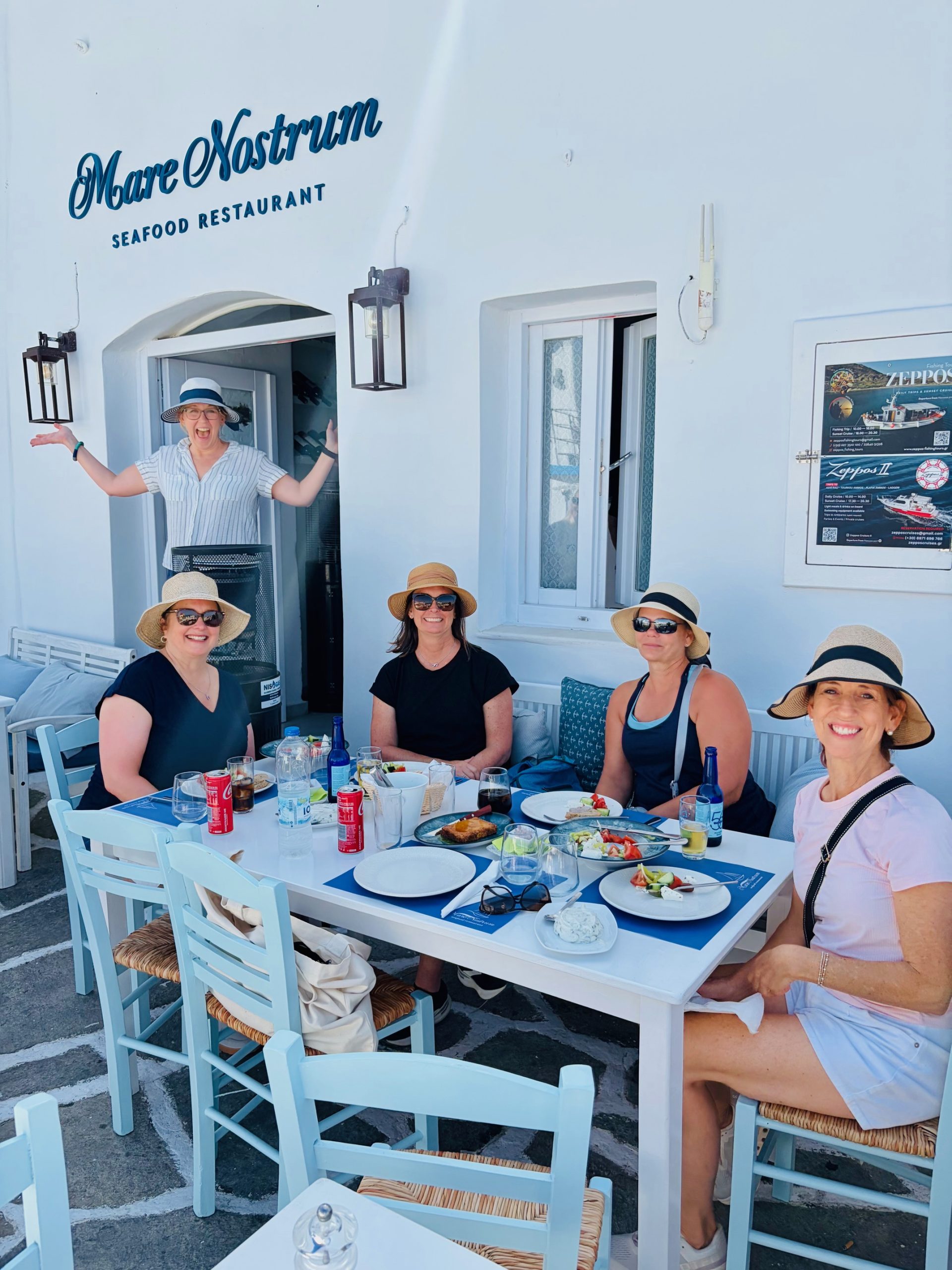
The fishing village of Noussá with fresh seafood lunch overlooking the harbor
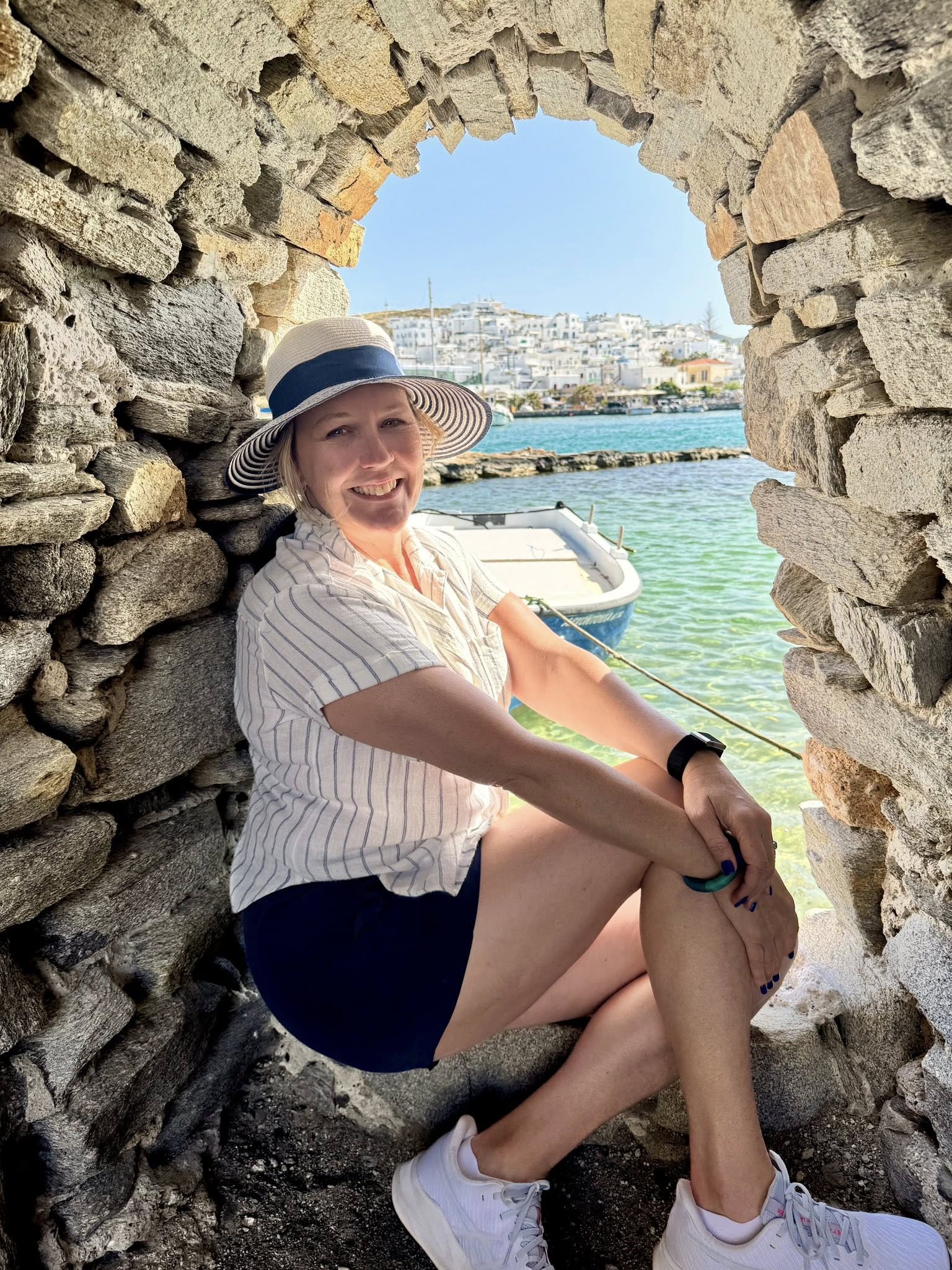
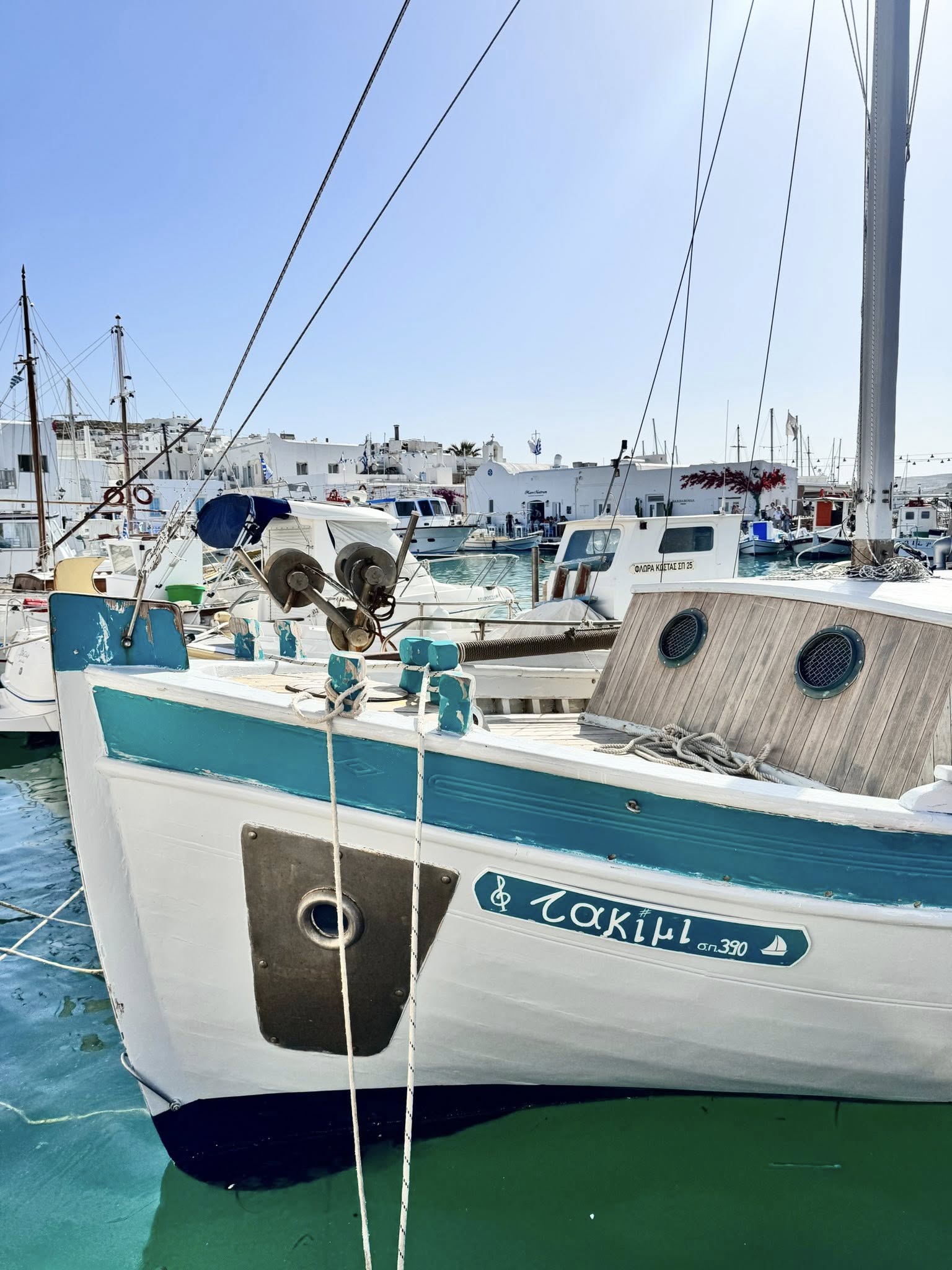
The Venetian fortress overlooks Noussá's harbor, where fishing is still part of daily life
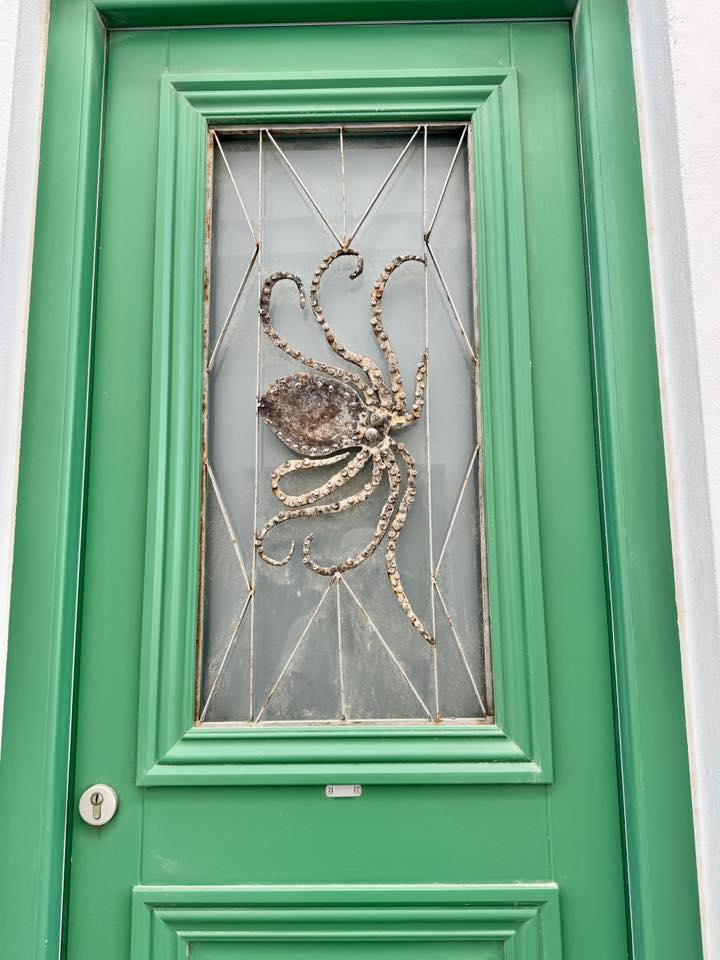
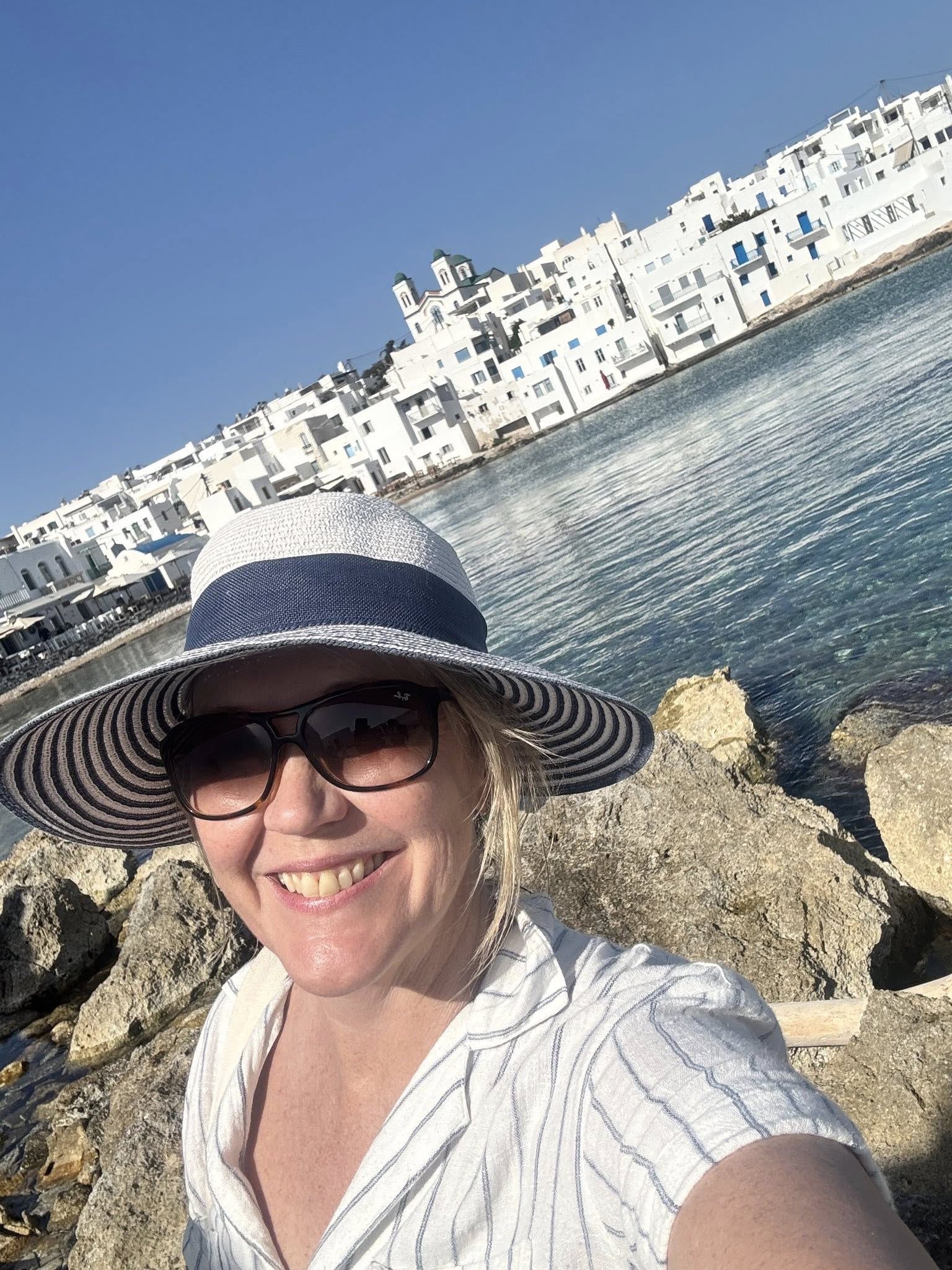
The iconic Cycladic architecture of Paros
Paros is what most travelers imagine when they picture Greece - white buildings with blue shutters, whitewashed sidewalks, that iconic Mediterranean village feel. If that's your dream, this is your destination. What happened on Paros for us was simple: we had a plan, the plan fell apart, and we adapted. That's travel.
Key Takeaway: Paros delivers the classic Greek island experience. If you've been envisioning white-washed villages and fishing harbors, Paros confirms whether this is the Mediterranean you want to return to.
Rhodes: Greek with Turkish Influence
By Wednesday (Day 3), I needed to stay on the ship for a few hours. My travel schedule is picking up, which means I'm working while I travel. I had a newsletter to finish and emails to catch up on. Rhodes is also somewhere I'd been before - I'd sailed Crystal Cruises here last summer - so I booked a half-day excursion through Explora while the rest of the group did full-day tours.
Our small group visited villages, walked chocklakia mosaic sidewalks (the traditional pebble designs), stepped inside an 85-year-old woman's traditional house, toured a ceramic workshop, and took in panoramic views from the hilltops. It was cultural immersion without being rushed - exactly what a half-day tour should feel like.
What struck me most was how different Rhodes feels from Paros. Same country, completely different atmosphere. You can see Turkey from Rhodes. The architecture reflects centuries of Ottoman influence. The light is different. Even the landscape itself feels distinct from the Cyclades.
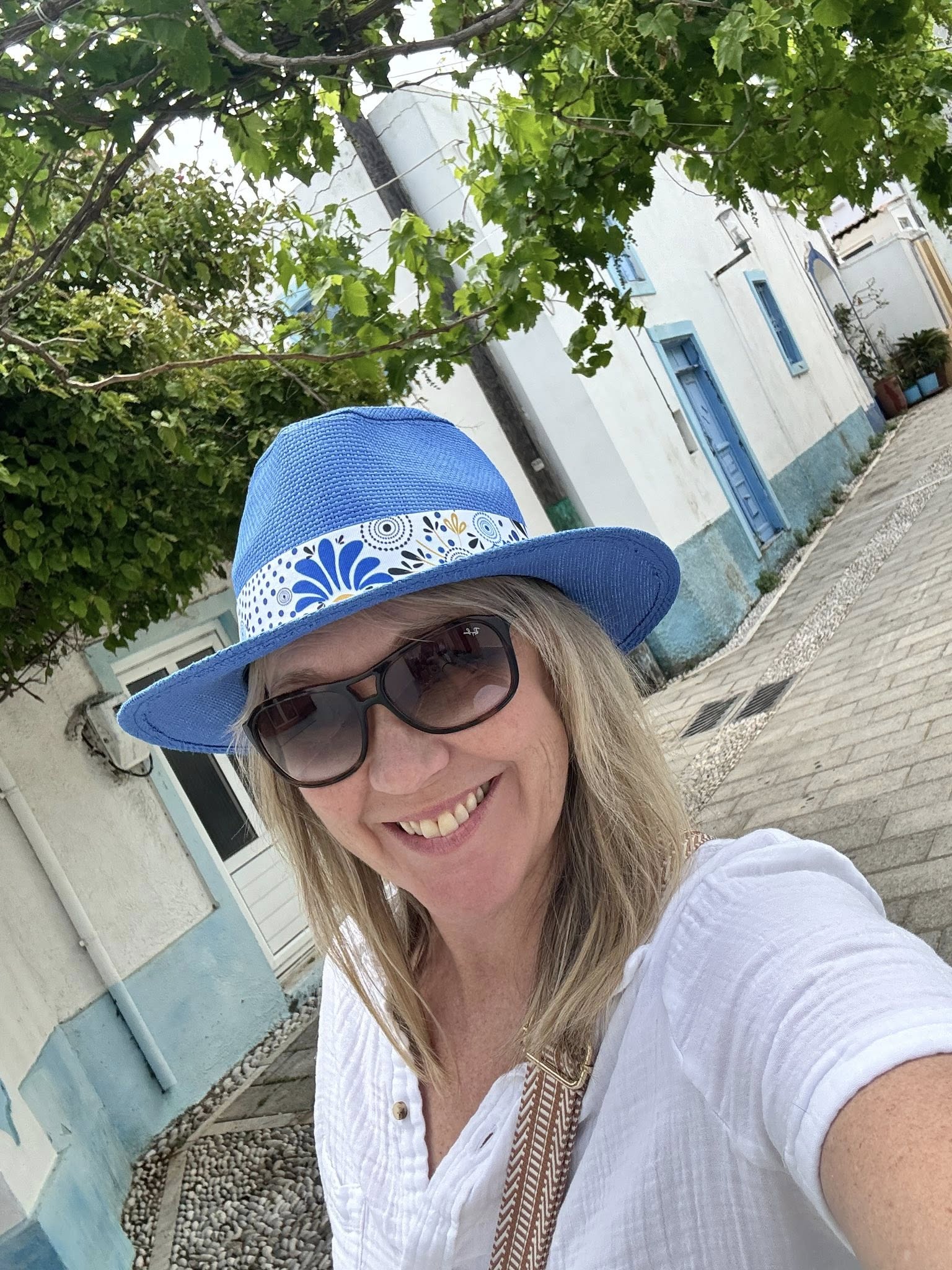
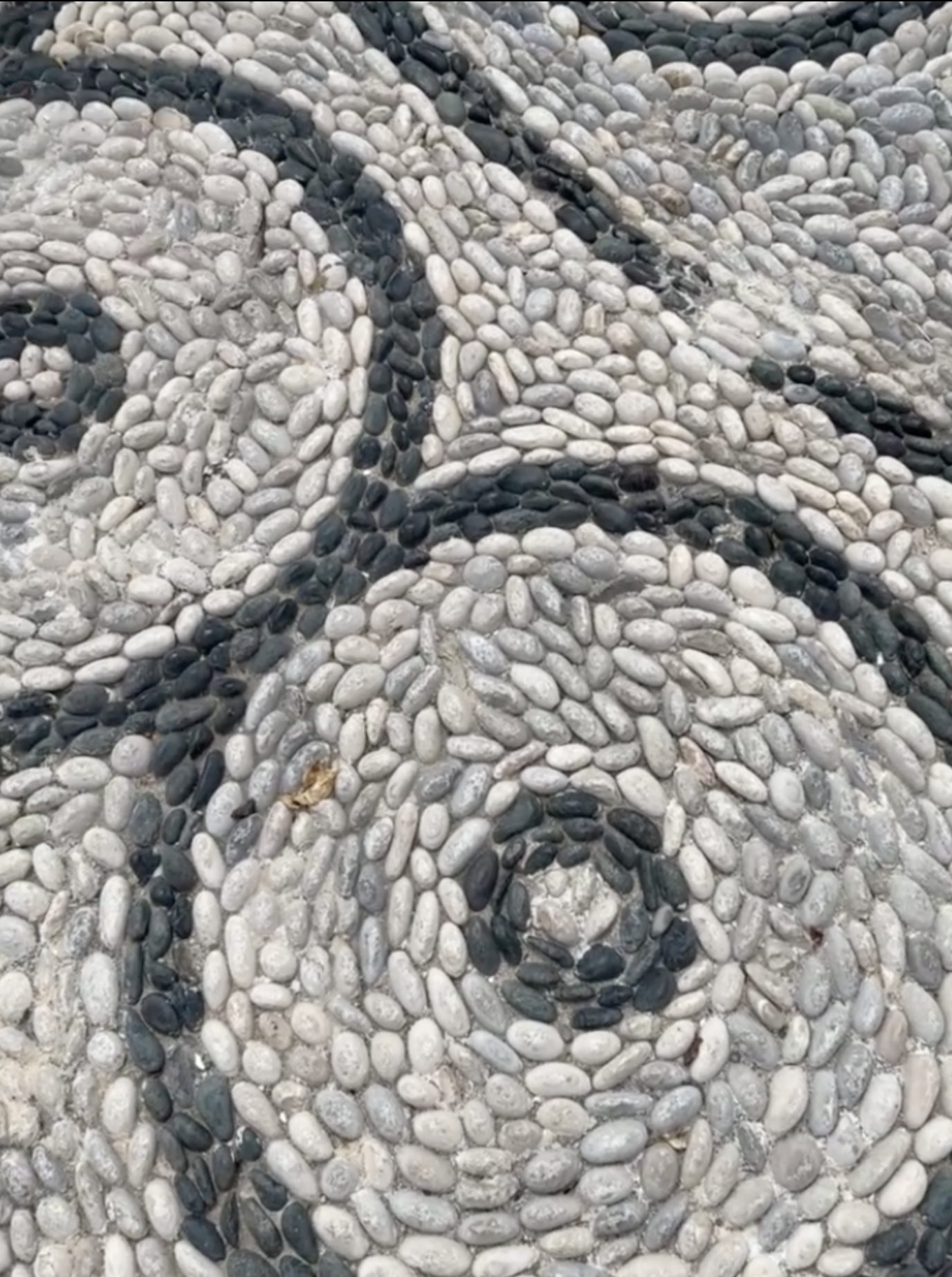
My new Paros hat gets its first outing in Rhodes - hand-laid chochlakia mosaics show the Byzantine and Ottoman influences that shaped the island
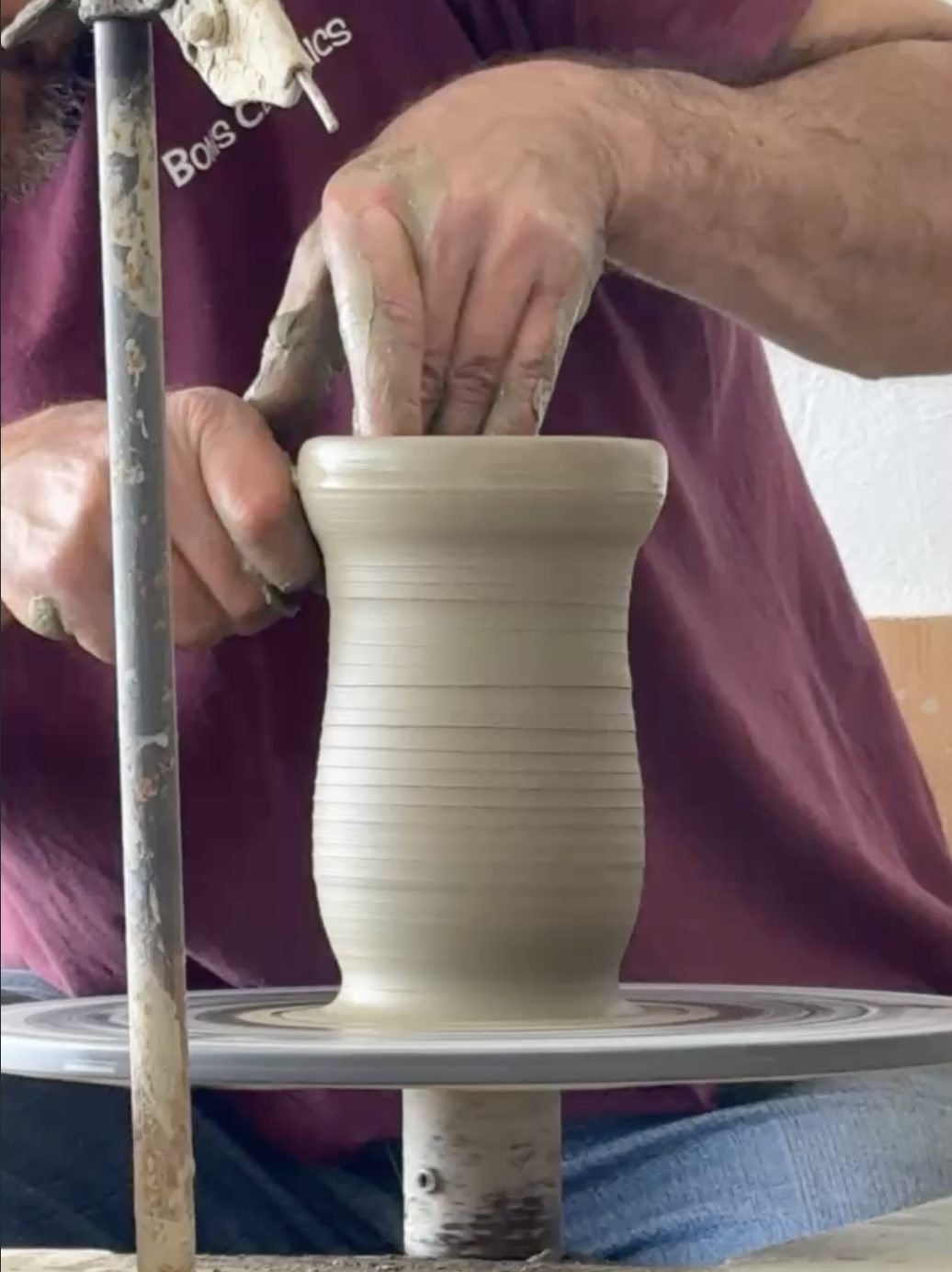
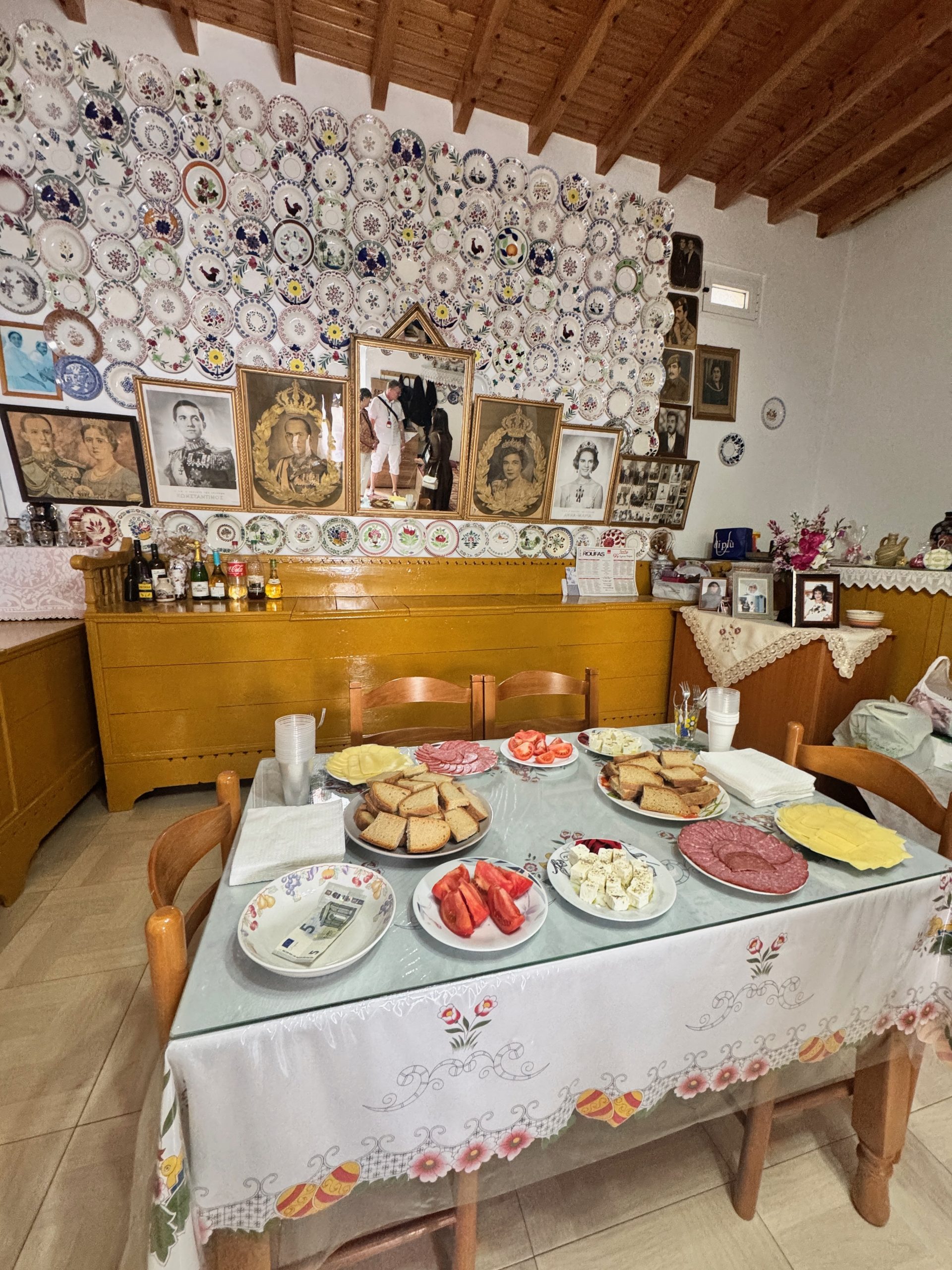
Byzantine traditions in ceramics and village life reveal Rhodes' layered history
Corfu: Where Greece Meets Italy
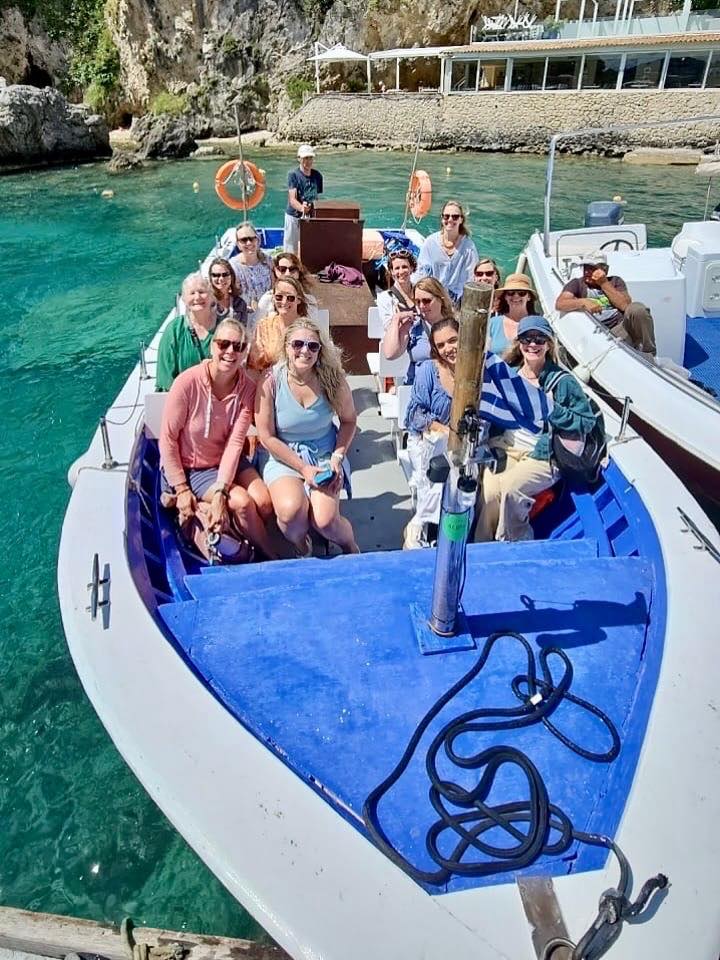
Day 4 was a sea day - our sailing day to Corfu in the Ionian Islands. Day 5 we arrived in Corfu, and this was the day all of us did something together. I hired a private guide and driver for our Wander Women group, and we visited the Monastery of Paleokastritsa, then headed out by boat to explore nearby beaches and caves. After lunch in Corfu town, we did a walking tour of the Old Town.
Even with a coordinated group activity, everyone still did their own thing. Some peeled off early to shop, some finished the full tour and wandered on their own, some took the easy route back to the ship via our driver. That flexibility - being part of a group but not tied to it - is what makes Wander Women trips work on a cruise.
But here's what surprised me about Corfu: it doesn't feel Greek in the way Paros or Rhodes do. The architecture is Italian. If you're sitting on the fence between a Greek island and Italian Riviera, Corfu bridges that gap in a single port.
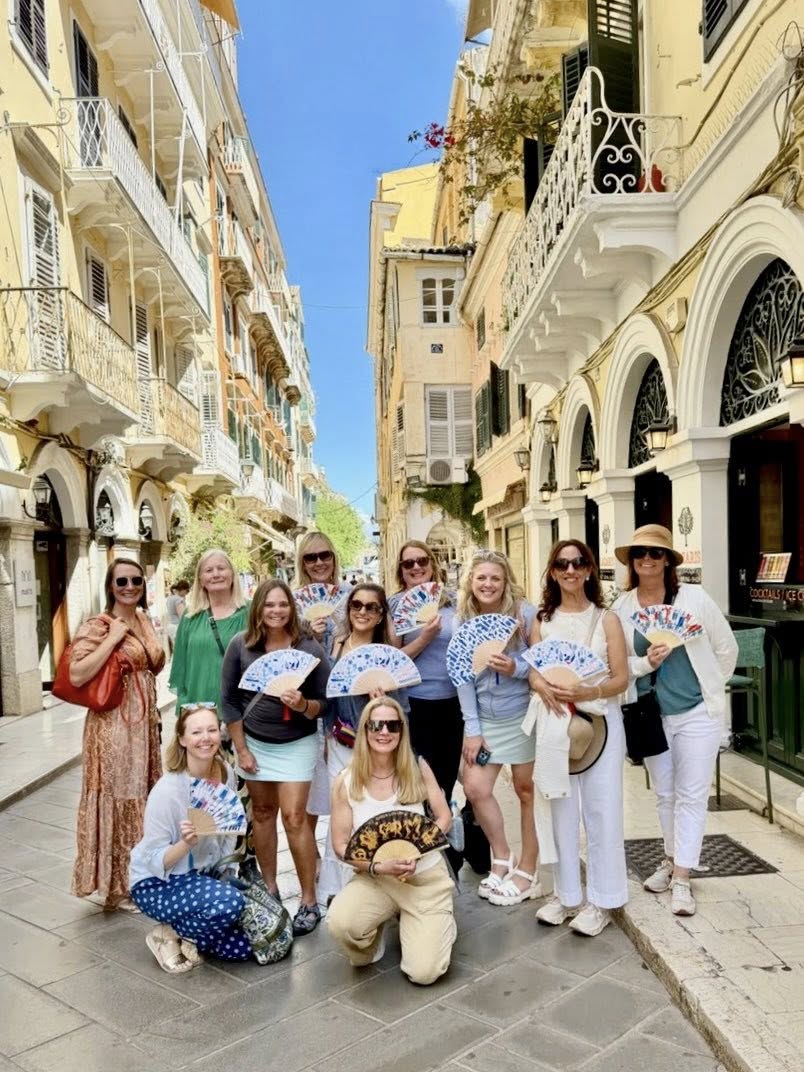
Corfu's Old Town has the charm of a Mediterranean village with distinctly Italian architecture
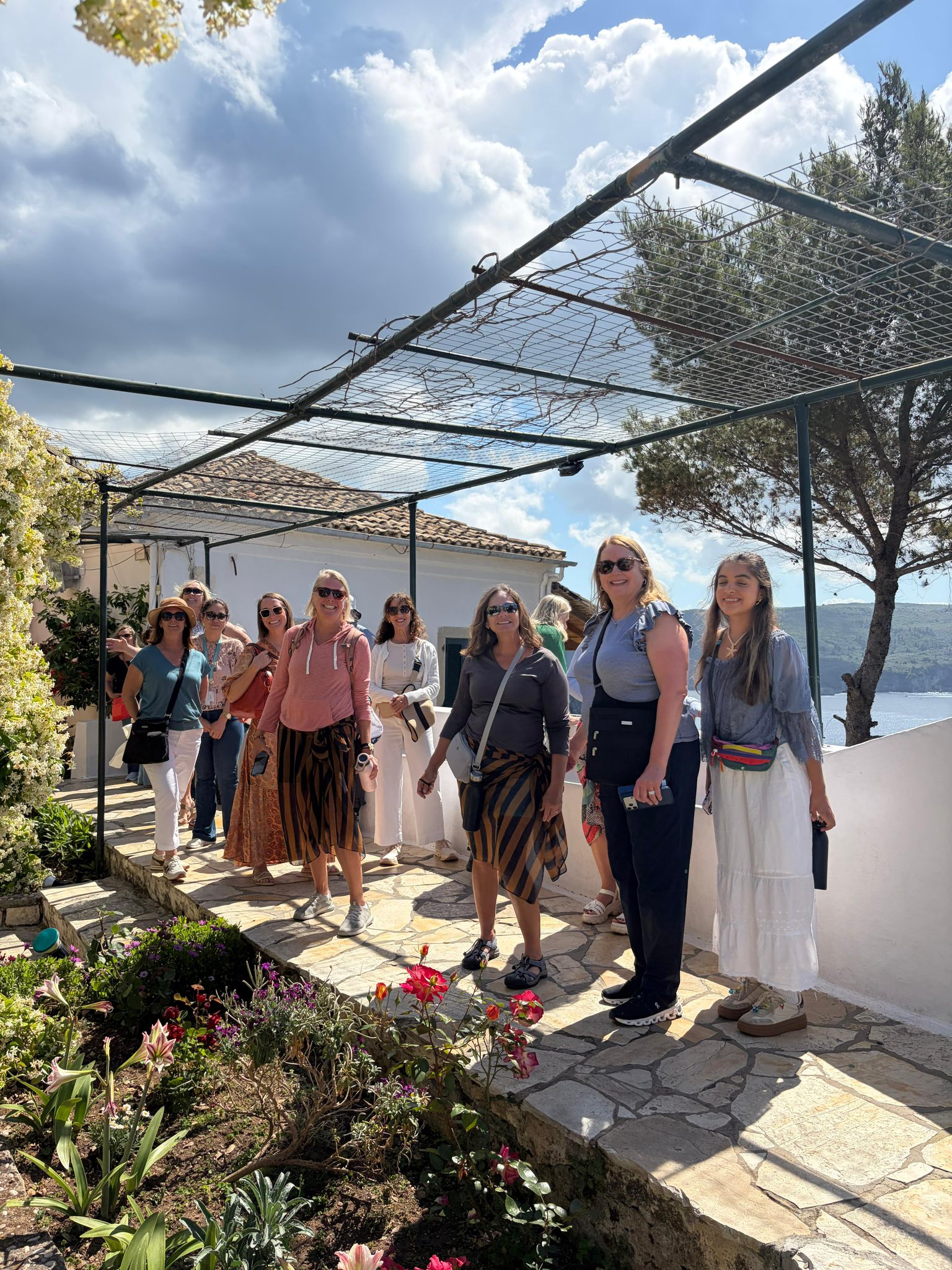
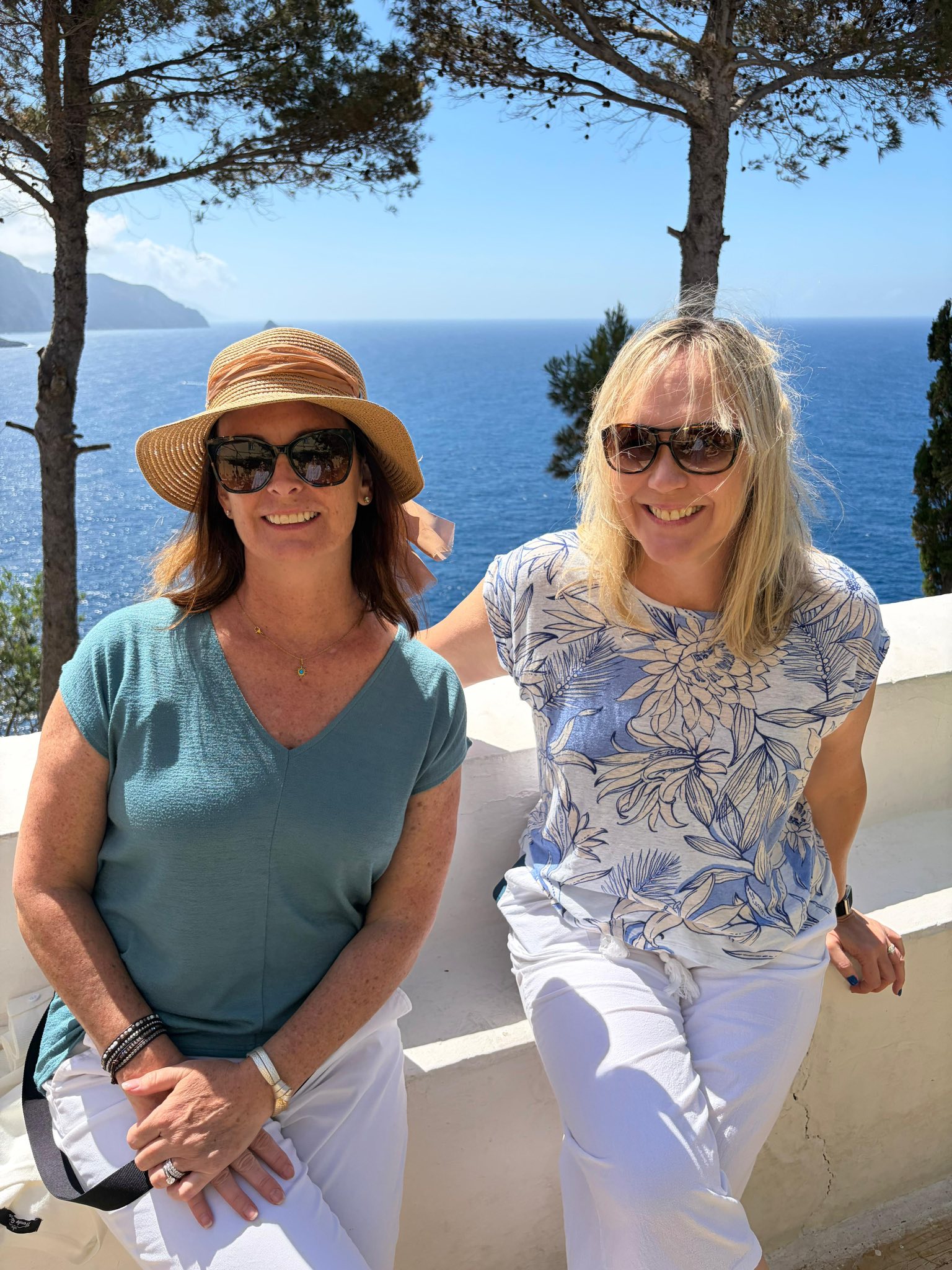
The Monastery of Paleokastritsa sits on dramatic cliffs overlooking the Ionian Sea, and the group tour atmosphere makes the experience memorable
Coastal Croatia: Stone, History, and a Different Rhythm
Day 6 brought high winds and rough seas - our planned stop at Hvar was cancelled. We didn't dock until noon, which meant I stayed on the ship for lunch at Sakura, my favorite onboard restaurant (you can only get reservations once a week, but they're open for lunch on port days). Explora provided us with umbrellas, so we were able to explore comfortably. Being on a cruise means so much is taken care of for you. By afternoon, I tendered ashore to wander Trogir.
I'd been to Trogir before, so I knew exactly what to expect. I ran into some of the Wander Women, grabbed Croatian wine and good company, and took photos that, honestly, turned out well on a gray day. The clouds gave the stone buildings a moody quality that I probably wouldn't have captured in bright sun.
Trogir is what coastal Croatia is really about: narrow stone alleys, medieval buildings pressed together, the sense that you've stepped back in time. It's completely different from the Greek islands - darker stone, narrower streets, more fortress-like. If Paros is sunny and open, Trogir is intimate and layered.
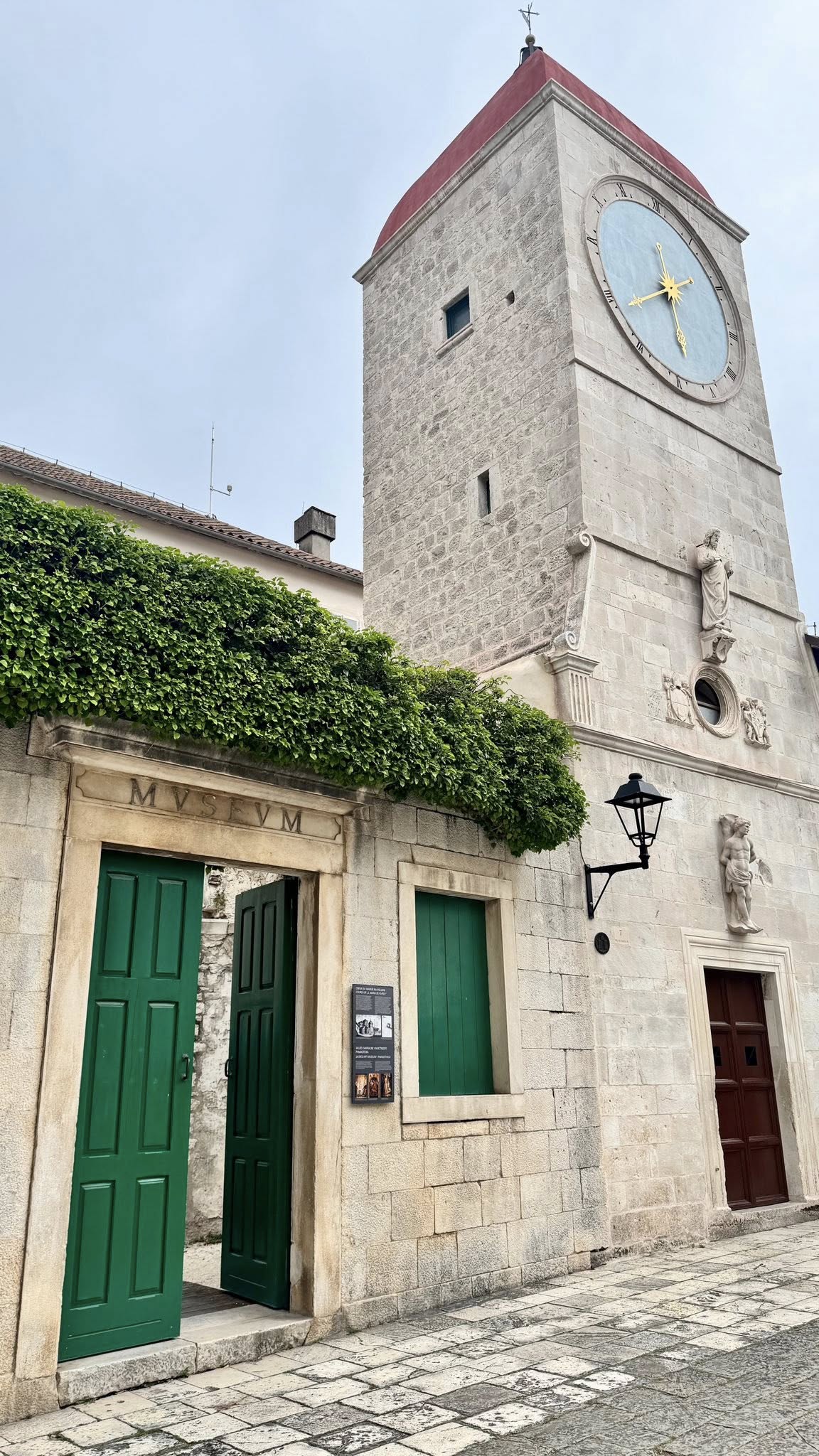
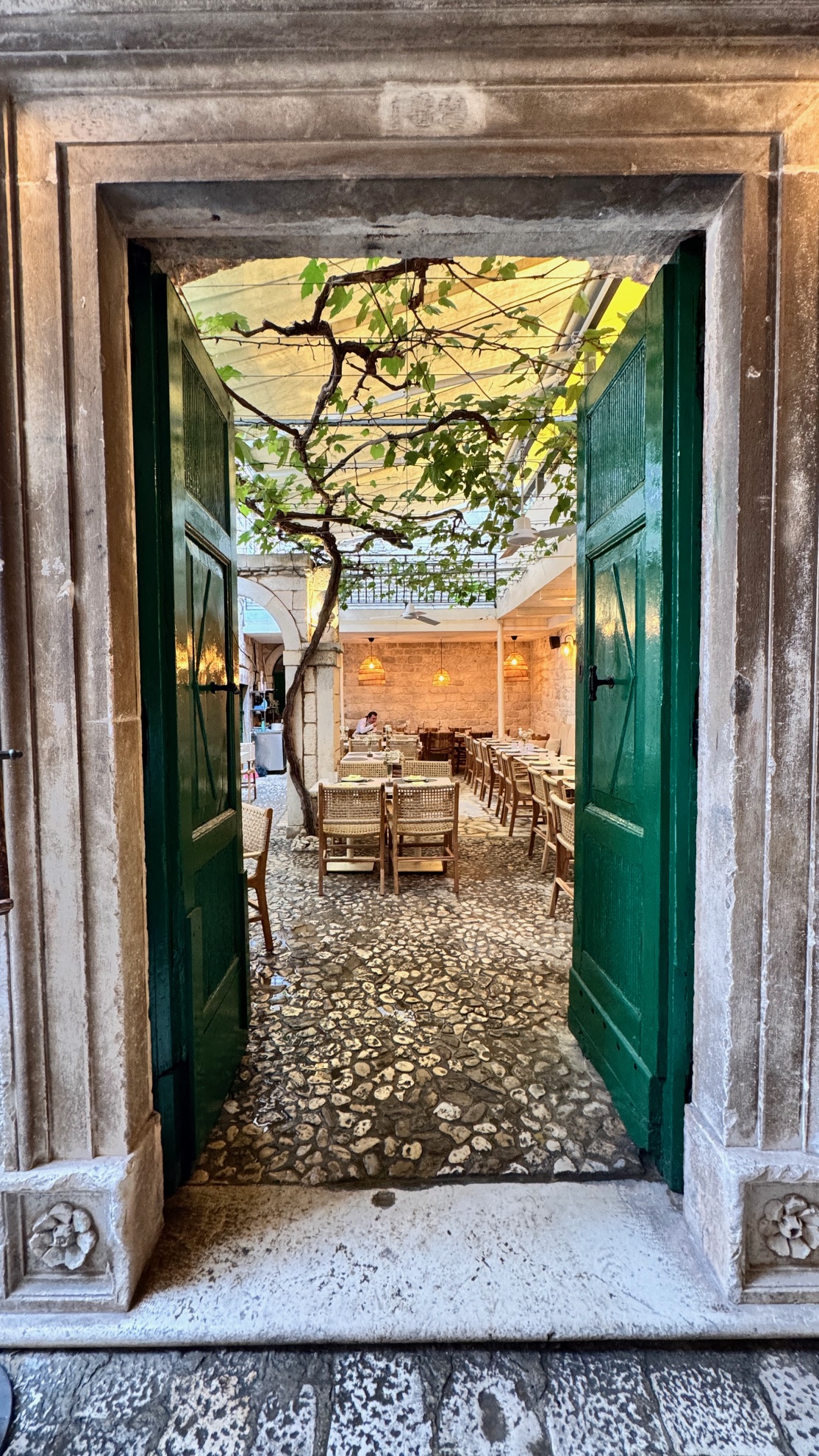
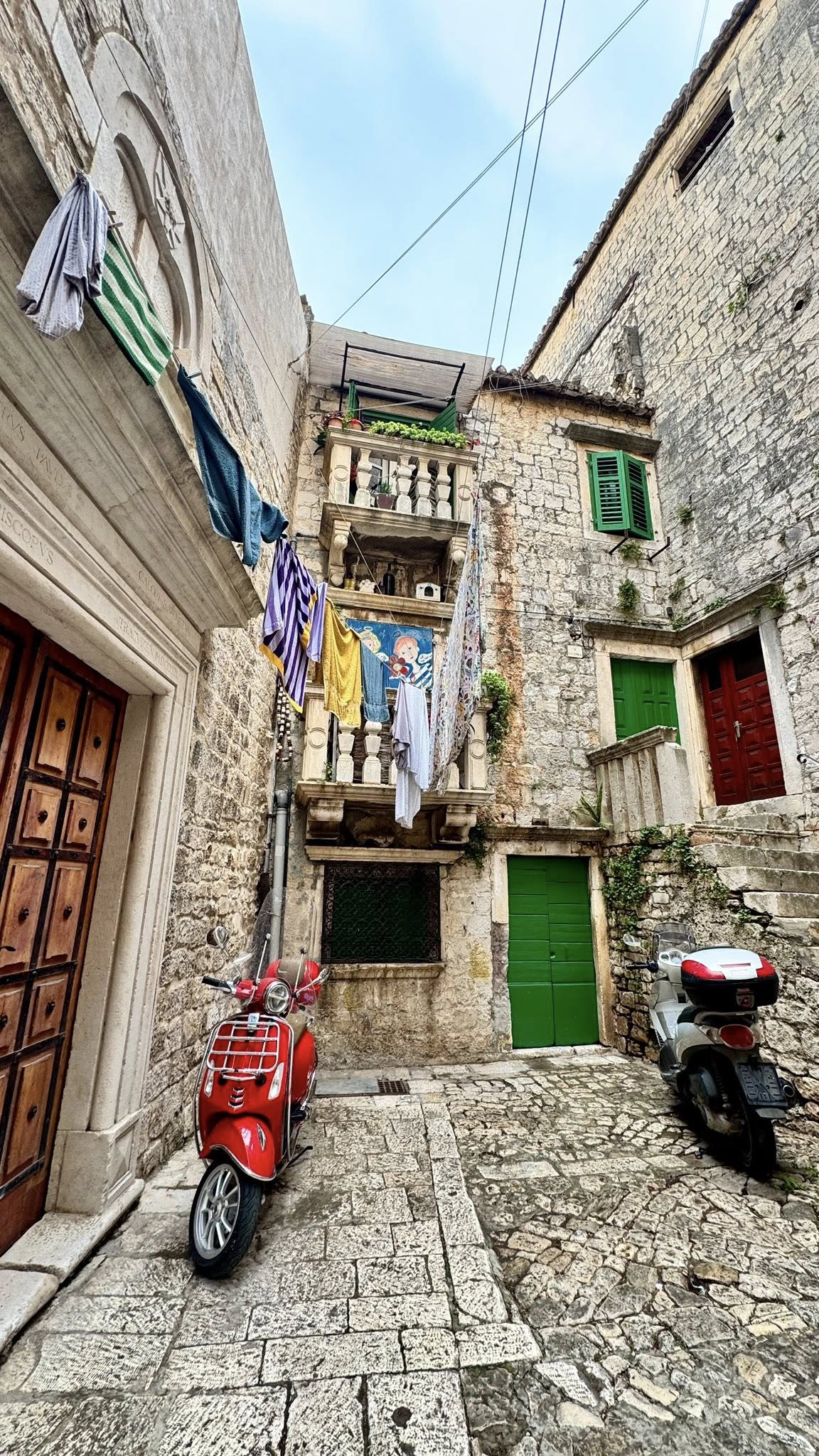
Trogir's medieval charm is visible in every doorway and clock tower. The stone architecture and narrow streets create an entirely different Mediterranean experience
Inland Croatia: Plitvice Waterfalls and a Bavarian Drive
Day 7 was our Explora-organized excursion to Plitvice Lakes National Park - a 2.5-hour drive each way from the port at Rijeka. This is the kind of tour where you truly need a cruise line's security. You're far from the ship, on an ambitious itinerary, and the biggest fear on any port excursion is that you'll be late getting back. On an Explora shore excursion, you know the ship will wait.
Plitvice Lakes is one of those destinations that shows up on every social media feed - the kind of place you save, dream about, and wonder if it could possibly live up to the photos. Somehow, it was even more magical in person.
Unlike most waterfalls, which form through erosion, Plitvice's waterfalls are actually growing. Dissolved calcium carbonate in the water precipitates onto moss, algae, and fallen logs, gradually building up travertine barriers that dam the water and create new cascades. The travertine barriers grow by approximately one centimetre per year, which means the Plitvice you photograph on your visit will look slightly different from the Plitvice your grandchildren will see.
It's a living geological laboratory - a landscape actively building itself. Knowing that changes how you experience it. Every moss-covered barrier, every impossibly turquoise pool, every wooden walkway - it's all part of an ongoing process. The park isn't just beautiful. It's alive.
We took the quickest route through the park, and everywhere we turned looked fake in the best possible way - too perfect to be real, but undeniably there. But the real surprise was the drive itself. The landscape en route to Rijeka felt like we'd left the Mediterranean entirely and landed somewhere in Bavaria - rolling hills, Alpine architecture, even a lunch stop at a restaurant that could have been straight out of the Alps.
My only regret is that we didn't have longer there.
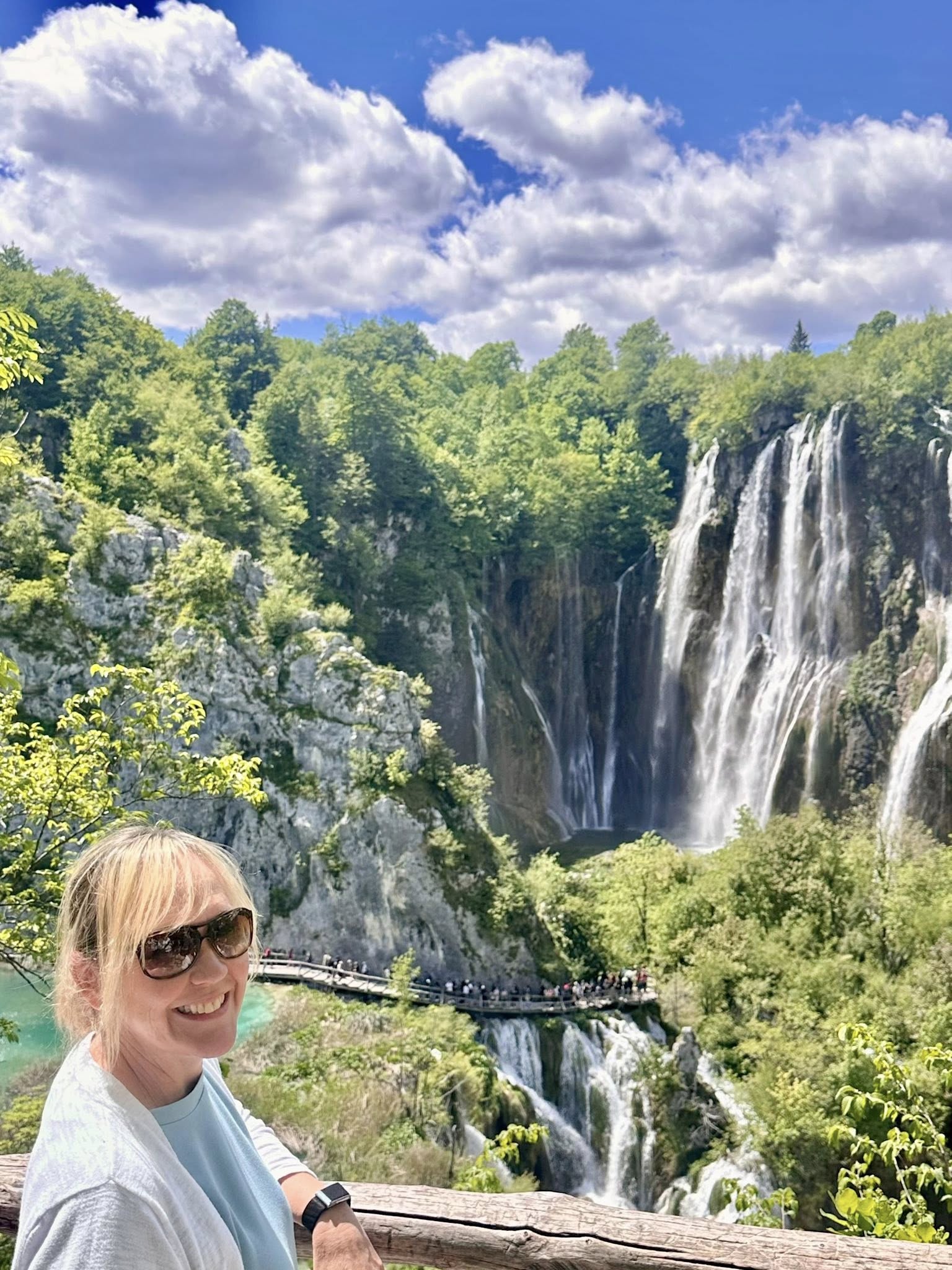
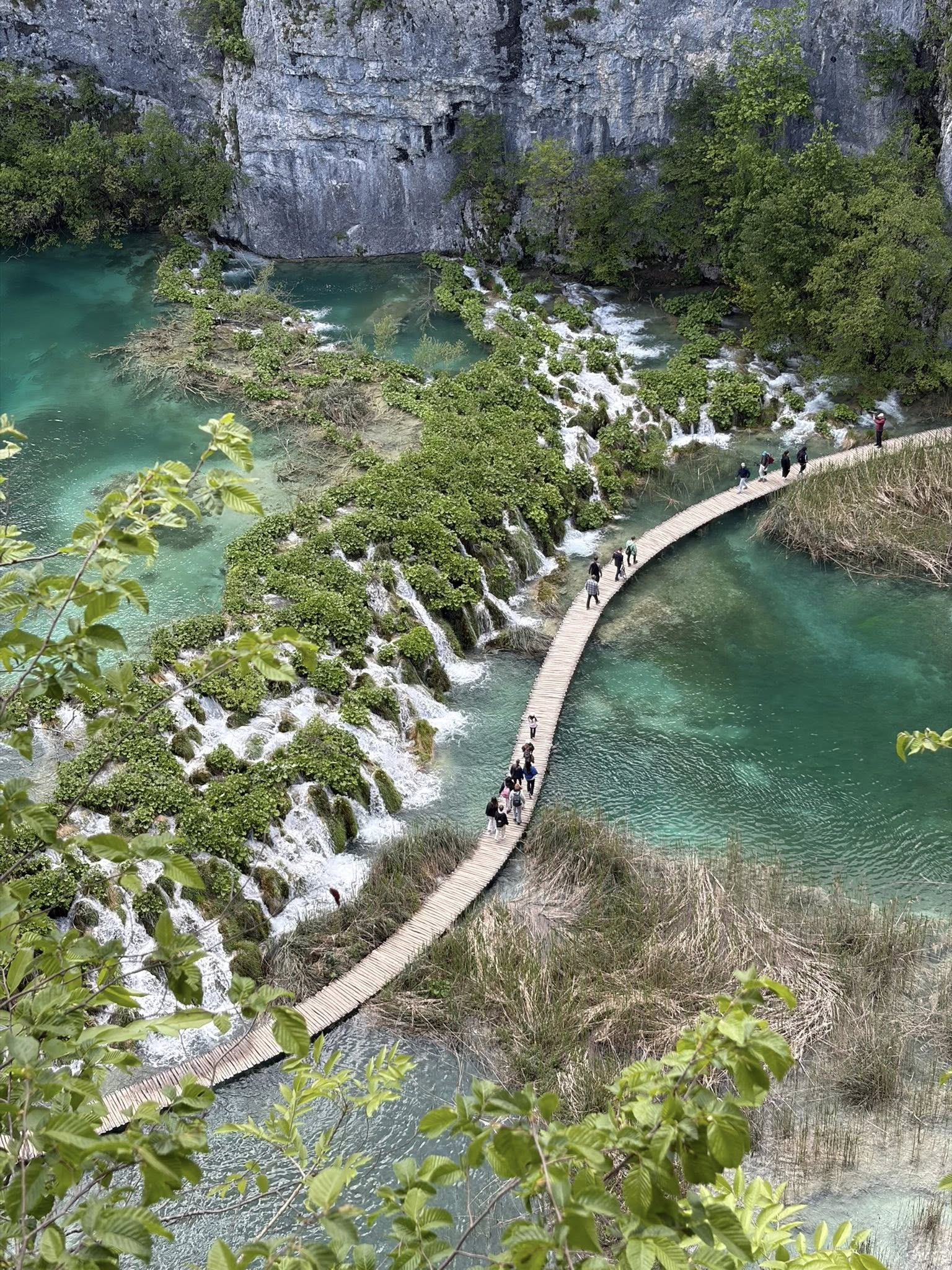
The turquoise lakes and cascading waterfalls of Plitvice create a landscape that feels otherworldly
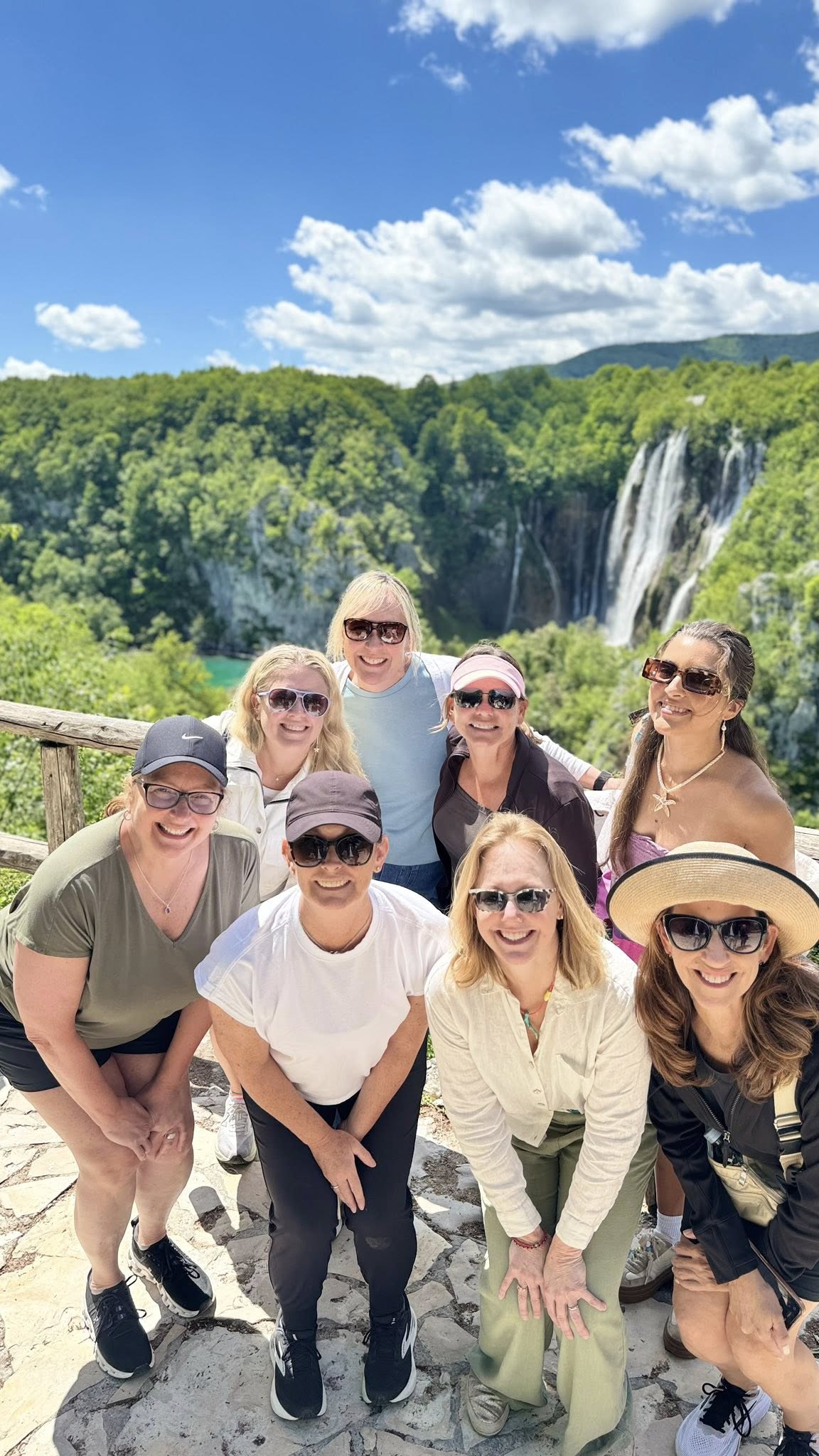
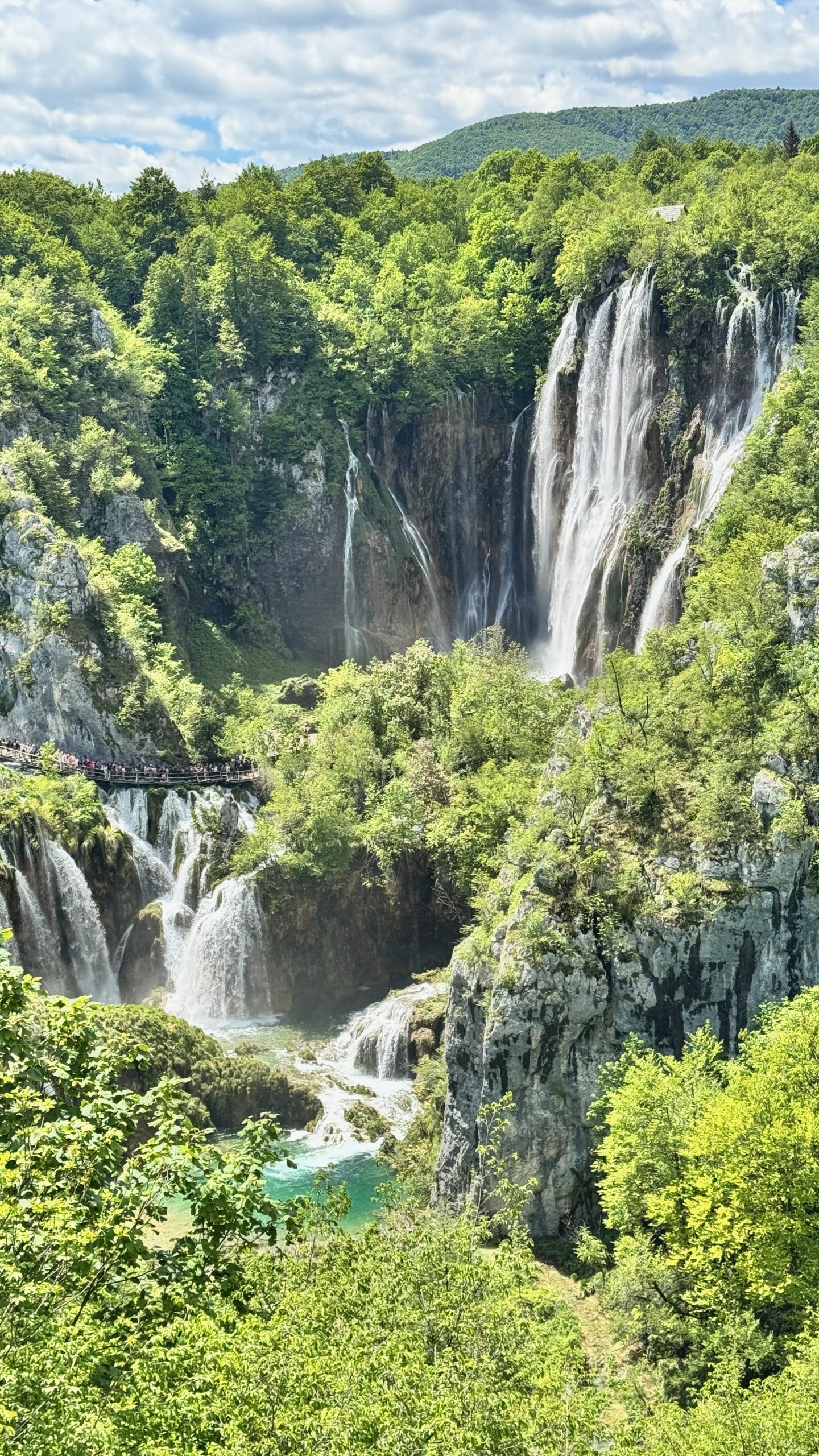
The scale and beauty of Plitvice are impossible to capture in a single photo, and every turn offers a new perspective
Here's what Plitvice taught me: a cruise isn't just about visiting ports. It's about accessing experiences that would be logistically complicated on your own. A 2.5-hour drive inland to waterfalls, then back to your ship - that's not something most land-based itineraries can offer. Explora's shore excursions handle the planning, the timing, and the logistics. You just show up and experience it. That peace of mind matters more than most people realize.
Key Takeaway: Plitvice Lakes is a living geological laboratory - waterfalls actually growing year by year through travertine precipitation. It's a completely different Mediterranean experience: inland, Alpine in character, and accessible only through an organized excursion.
So Which Mediterranean Is Yours?
After eight days, I'd experienced five completely different versions of what the Mediterranean can be. Iconic white-washed Greek islands. Turkish-influenced Greek towns. Italian-feeling Ionian villages. Stone-and-history Croatian coastlines. Inland waterfalls that feel like they belong in Bavaria.
The question I hear most - "Which part of the Mediterranean should we visit?" - stops being either-or. It becomes: "Which one called to me most?"
Maybe it was the lunch in Noussá. Maybe it was the monastery bells in Corfu. Maybe it was grabbing Croatian wine and conversation in Trogir. Maybe it was standing in front of Plitvice waterfalls realizing the photos don't even come close.
One Explora sailing showed me all five. Now you have a choice: go deeper on a land-based trip focused on whichever region captured you, or rebook Explora's return itinerary from Venice back to Athens, which visits completely different ports. Some use this trip as a scouting mission for a deeper land-based experience down the line. Some rebook immediately, drawn to the ease and quality of the ship.
Both strategies work. That's the real value of sailing a luxury cruise line that offers regional variety. You're not just visiting ports. You're gathering information about yourself - about what calls to you, what you need from a trip, what kind of traveler you actually are when the logistics are easy enough to get out of the way.
A luxury cruise isn't just about visiting ports. It's about gathering information about where your next deep dive should be.
If you're torn between Mediterranean destinations, consider a regional sailing like this one first. Experience multiple regions without repacking. See where your heart pulls you. Then design your next trip - whether it's back on Explora exploring new ports, or a deep-dive land trip focused on your favorite region. You'll make a better decision because you'll know yourself better. That's worth the investment.
Decision Framework: After sampling all five regions, ask yourself: Do I want to return to the iconic white-washed islands (Paros)? Explore Turkish-influenced Greece (Rhodes)? Experience Italian-Mediterranean fusion (Corfu)? Discover medieval European coastlines (Trogir)? Or venture inland to geological wonders (Plitvice)? Your answer determines whether your next trip is land-based or another cruise - and which region gets your focus.
Ready to discover your Mediterranean?
Let's talk about which region calls to you - and how to design a trip that explores it fully.
Start Planning